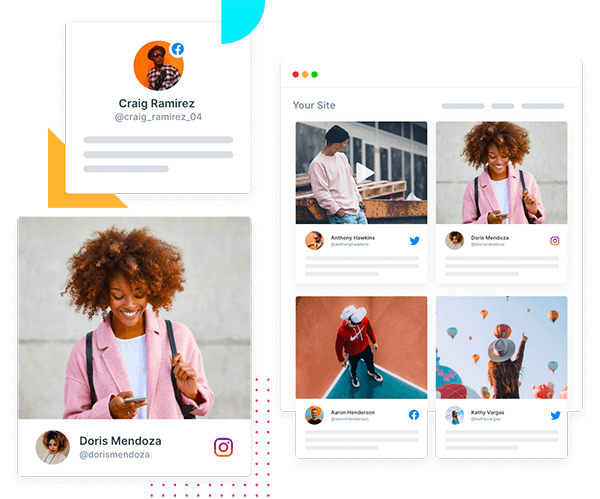
What Social Commerce Means For E-Commerce: Benefits, Trends, and Key Insights
Social commerce makes shopping happen right where discovery happens, inside the social media platform. No tab-hopping, no lost intent. It’s quick for shoppers and powerful for brands, as it allows you to show the product and close the sale in one place.
Want the same for your brand? You’ve come to the right place. We’ve got everything you need to know about social commerce. From its notable benefits to intriguing examples, everything is covered.


What is social commerce?
Simply put, Social Commerce is selling and buying products directly through social media platforms. Instead of hopping over to a website, users can discover and purchase items right from apps like Instagram, TikTok, or Facebook etc.. That’s not it; when used effectively, social commerce also helps in creating connections. Brands can use user-generated content shared by real customers to build trust and make shopping feel personal. Social Commerce also creates an interactive shopping experience for a potential customer, increasing their chances of making a purchase.
Benefits Of Social Commerce For Your Business
Here are some key benefits of social commerce that would make you opt for it.
- Seamless Shopping: No app-hopping. With TikTok Shop or Instagram product tags, shoppers tap, choose a size, and check out without leaving the feed. Fewer steps, fewer drop-offs.
- Enhanced Engagement: Social shopping turns a scroll into a conversation. Likes, comments, DMs, and shares sit next to the “Buy” button—so discovery, proof, and purchase happen in one place.
- Smarter Targeting: Platforms already know what your audience watches, saves, and clicks. Pair those signals with Instagram analytics to learn what sticks and shape your next creative, offer, or drop.
- Higher Conversions: When discovery and checkout live side by side, the funnel shrinks. Expect cleaner add-to-cart paths and faster decisions—especially on short video and UGC posts.
- No Full Website Required: You don’t need a perfect storefront to start selling. Launch a lightweight social shop, validate demand, then deepen the experience on your site as you grow.
- Leverage the Audience You’ve Built: Your followers are already warm. Social commerce turns that attention into action—more product visibility, more saves and shares, and steady word-of-mouth without heavy ad spend.
Social Commerce Statistics
Here are some notable statistics related to social commerce proving its importance in the marketing and e-commerce industry.
- Facebook is the leading social media platform for social commerce, with over 64 million buyers in 2024. This makes it important for brands to have a presence on Facebook social commerce to expand their reach and increase sales
- The social commerce industry is predicted to touch the $80 billion mark by the end of 2025. This only proves that the industry is trending and will only move up from here. Hence, brands must choose this option as soon as possible to make the most out of it.
- As per the research conducted by Forbes, 67% prefer using Instagram over Google to search for things. This means that if a potential buyer wants to know about your brand, they are more likely to search on Instagram, making it extremely crucial for you to have an all-around presence there, including an Instagram shop.
- Statista has also predicted that out of all the sales made in 2025, social commerce will have a massive 17% contribution, which is significantly higher than its share in previous years. This means that more and more brands are moving towards social commerce, and you must also do the same.
- 90% of people buy from brands that they follow on social media. So if you have decent followers, a social commerce platform is the best way to convert them into your loyal customers.
Social Commerce Trends For 2025
If you are thinking about moving towards social commerce, you must be aware of these trends to maximize the benefits you get from it.
1. Augmented Reality (AR) Shopping
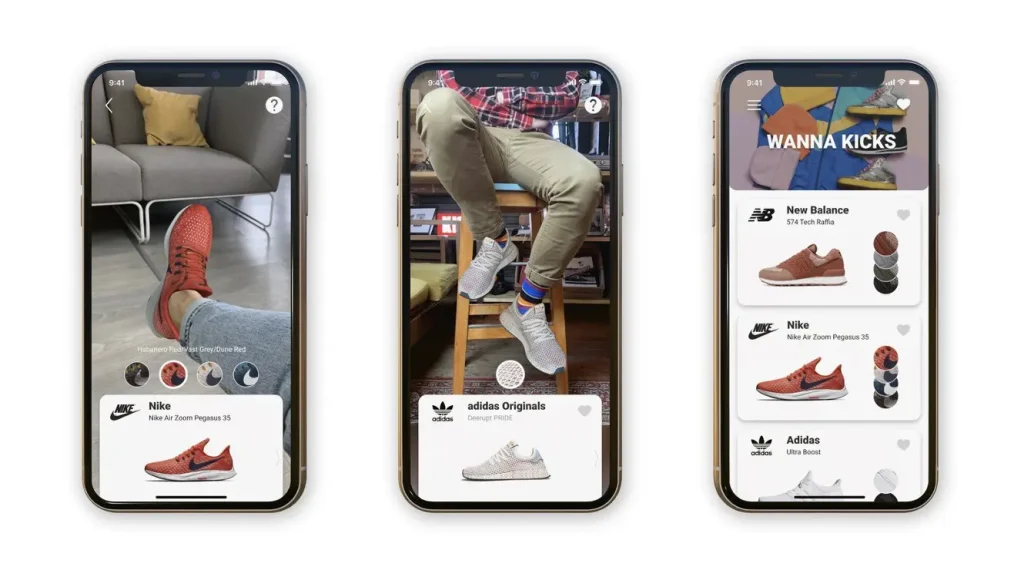
AR lets shoppers handle the “will it suit me / will it fit here” questions before they buy. From virtual try-ons for glasses and lipstick to dropping a sofa into the living room with a phone camera, customers can explore size, color, and style in context. Even smart labels—scan to surface ingredient callouts or care tips—live inside social apps, so the entire trial happens without breaking the scroll. The experience feels playful, personal, and low-friction, which is why people keep using it.
How it Helps You as a Marketer: AR builds purchase confidence and cuts down on costly returns because buyers see the product in their own space. It also boosts dwell time and saves; those signals improve delivery on ads and recommendations. Use AR clips in reels and stories, pair them with shoppable tags, and you’ll see higher conversion and more memorable brand moments.
2. Shoppable User-Generated Content (UGC)
Social runs on real voices. Shoppable UGC turns customer photos, unboxings, try-ons, and quick reviews into posts you can buy from on the spot. Followers can move from “I like how that looks on her” to “Add to cart” in a tap, right under a creator’s reel or a customer’s carousel. It’s the closest thing to word-of-mouth at checkout.
How it Helps You as a Marketer: UGC removes distrust and shortens the path to purchase. Feature rights-approved customer clips, tag the exact SKUs, and let comments answer objections in public. The result is higher engagement, better click-through, and peer-driven sales that keep compounding as more customers share their own results.
3. Hyper-Personalized Recommendations
AI now stitches together signals—what people watch, save, click, and ignore—to serve product suggestions that feel handpicked. The same engine adapts creatively: different thumbnails, captions, and offers for different cohorts across posts, videos, and ads. It’s not “one ad fits all” anymore; it’s a rolling stream of relevant prompts that update with behavior.
How it Helps You as a Marketer: Relevance lifts everything. Personalized feeds raise click-through and conversion while trimming wasted spend. Use social selling platform insights plus your first-party data to build segments, then rotate creative and bundles by intent—new here, considering, almost ready. You’ll spend the same budget but show up with products each viewer is actually likely to buy.
4. Ethical and Sustainable Shopping
More buyers want to know the story behind what they purchase—materials, sourcing, certifications, worker practices, even packaging. Social commerce makes that story easy to tell with short videos, carousels, and pinned highlights that accompany the product tag and price. Transparency becomes part of the shopping experience, not a buried FAQ.
How it Helps You as a Marketer: Clear proof of responsibility attracts conscious consumers and deepens loyalty across the board. Label your claims, show the process, and pair impact notes with shoppable posts. You’ll differentiate in crowded feeds, earn saves and shares for the right reasons, and turn values into a sustained reason to choose you again.
Top Social Commerce Examples
1. Sephora – Instagram Shopping & AR Try-On
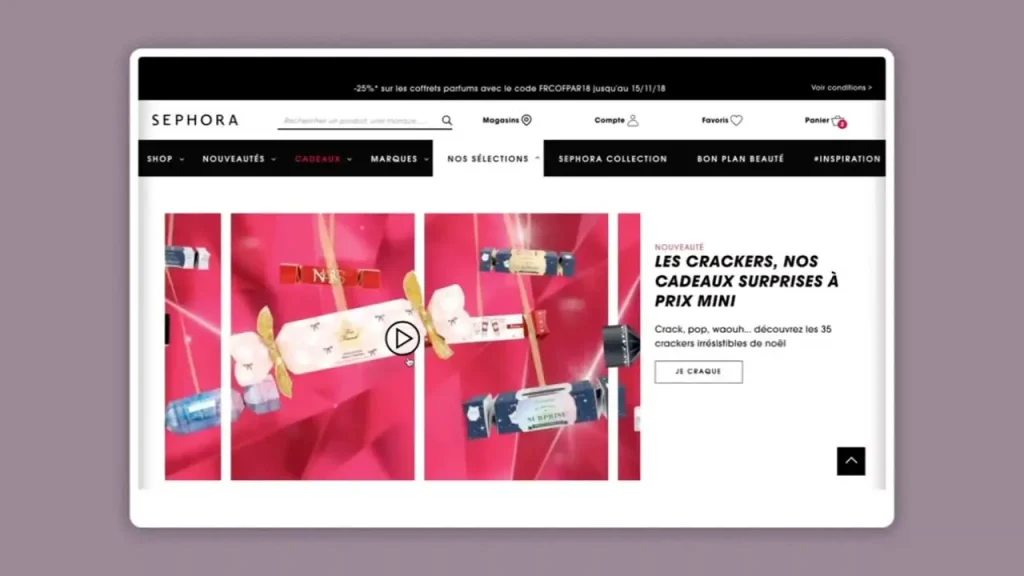
Sephora leverages Instagram’s shoppable posts and AR try-on features, allowing users to test makeup products virtually. Shoppers can see how a lipstick or eyeshadow looks on them before purchasing—without leaving the app.
Marketing Benefit: By combining shoppable content with interactive experiences, Sephora drives higher conversions and builds trust, making customers more likely to buy on impulse.
2. Glossier – Shoppable UGC & Micro-Influencer Marketing
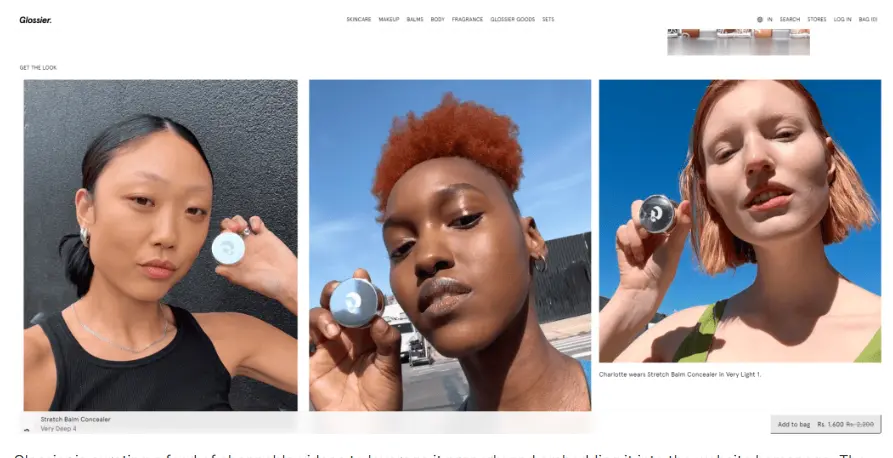
Glossier thrives on user-generated content. Customers post selfies and reviews, and Glossier tags products directly in the posts, turning real experiences into shoppable moments. They also collaborate with micro-influencers for authentic promotion.
Marketing Benefit: UGC-driven social commerce builds authenticity and engagement. Shoppers trust peer reviews more than ads, which helps Glossier convert followers into buyers efficiently.
3. Nike – TikTok Campaigns & Video Commerce
Nike uses TikTok to showcase products in action—short, engaging videos highlight sneakers during workouts or streetwear outfits. Many videos include direct links to purchase, combining entertainment with shopping.
Marketing Benefit: Video content creates emotional engagement. Customers see products in real-life contexts, driving higher click-throughs and encouraging immediate purchases.
Social Commerce Future
The future of social commerce is hands-on and fast, mixing smart tech with personal touches and zero-friction checkout. Expect AI to do more than “recommend”—it will learn taste, budget, and timing to surface the right bundle or size at the exact moment a buyer is ready. AR try-ons and VR showrooms will move from novelty to routine, letting shoppers see shades on skin, furniture in a room, or sneakers in motion before they buy. Live drops, creator-led demos, and interactive video will turn comments and DMs into real-time product Q&A—and instant purchase. Meanwhile, native wallets and one-tap payments will be baked deeper into feeds, shrinking the distance between interest and order. For marketers, that adds up to cleaner attribution, steadier conversion, and social conversations that translate directly into measurable sales.
Conclusion
Social commerce is reshaping the way brands connect with customers, merging social interaction with seamless shopping. By leveraging trends like shoppable content, video commerce, AR experiences, and micro-influencers, businesses can create engaging, personalized, and convenient shopping journeys. As technology continues to evolve, marketers who adopt social commerce strategies early will gain a competitive edge, building stronger relationships and driving higher conversions. In today’s digital-first world, integrating social commerce into your marketing approach isn’t just an option—it’s a necessity for growth and customer engagement.
Frequently Asked Questions
Yes, social commerce is a booming industry and is expected to reach around 80 billion this year.
Social commerce can be defined as a modified version of social media where, apart from scrolling through posts, users can also make purchases, unlike traditional social media.
Quick commerce is a new concept where the product bought by the user is delivered to them within minutes or a couple of hours at most.
Social commerce is gaining a lot of popularity as it allows users to buy a product without leaving social media. Users can chat and shop at the same place, making it a fantastic option for regular online shoppers.
Embed social feed from Facebook, YouTube, Instagram, Twitter on your website, like a PRO
Invalid Email Address Multiple Themes