Build A Personal Branding On LinkedIn That Stands Out
LinkedIn is no longer just a place to upload your résumé. Today, personal branding on LinkedIn has become essential for building credibility, attracting opportunities, and shaping how people perceive you professionally.
Whether you are a marketer, founder, freelancer, or working professional, your LinkedIn presence often speaks before you do. The posts you share, the comments you leave, and the way your profile is positioned all influence your personal brand.
In this guide, we’ll break down how to build a personal brand on LinkedIn that feels credible, consistent, and memorable.
What is Personal Branding on LinkedIn?
Personal branding on LinkedIn is the practice of intentionally shaping how you’re perceived through your content, profile, and interactions on LinkedIn.
It goes beyond mere presence. It’s about consistently communicating what you stand for, what you know, and why people should trust or follow you.
Unlike traditional branding, which focuses on businesses, building a personal brand on LinkedIn puts the spotlight on individuals. Your ideas, experiences, and perspectives become the core of your brand.
Whether it’s through posts, comments, or your profile, every action contributes to your LinkedIn personal branding strategy, shaping how your audience remembers you. In short, it’s not just about being active. It’s about being intentional.
Why does Personal Branding on LinkedIn matter?
According to us, a strong personal brand isn’t just “nice to have.” It’s a leverage and an opportunity to bring your A-Game to the forefront.
Here’s all that it does:
1. Reputation
Your personal brand is what people say about you when you’re not in the room. On LinkedIn, that perception is built in public.
2. People Trust People
People do not trust fancy logos; they trust people. A strong personal presence makes your brand feel more human and relatable.
3. Visibility Is Opportunity
Consistent content keeps you top-of-mind, which leads to inbound opportunities: jobs, clients, and collaborations.
4. Conversations are Conversions
Engagement builds relationships. Relationships turn into business. Storytelling scales faster than ads. Authentic experiences outperform polished marketing.
The Foundation of Building a Personal Brand on LinkedIn
Most people jump straight into posting and then wonder why nothing sticks. The real work happens before you ever hit publish. Before content, before growth hacks, before follower counts, comes clarity. And clarity only comes when you sit with three honest questions:
– What do I want to be known for?
Not your job title. Not your company. You. Think about the one or two things you want to consistently own in someone’s mind when they see your name. Are you the go-to person for B2B marketing strategy? Career pivots? Financial literacy for millennials? The sharper your answer, the stronger your foundation.
– Who do I want to attract?
Your audience shapes everything: your tone, your topics, your examples. A founder targeting investors writes differently than a designer targeting hiring managers. Get specific. “Professionals” is not an audience. “First-time founders building in the SaaS space” is.
– What value can I consistently provide?
Consistency is the word people skip over. Not what’s impressive, what’s sustainable. If you can teach, inspire, or challenge your audience every week without burning out, that’s your content sweet spot.
Optimize Your LinkedIn Profile For Personal Branding
Your profile isn’t a résumé anymore. It’s a landing page, where you’re evaluated, both as a person and a professional, and it’s important to leave the best mark. Here is what to keep in consideration:
– Headline
Don’t just list your role or designation; explain it and add value. Like: “Helping SaaS brands grow with UGC” > “Marketing Manager”. This will always be greater than just your position mentioned. ‘What you do’ and how you help others set you apart.
– About Section
If your headline gets them to stop, your About section keeps them there. This is where personal authenticity meets credibility, and where most people either win followers or lose them. Dont open with “I am a marketing professional with 8 years of experience.” Nobody wakes up excited to read that. Instead, open with something that makes them want to click “see more” – a bold opinion, a surprising result, or a problem your audience deeply relates to.
– Banner & Featured Section
These two are the most underused parts of a LinkedIn profile and among the highest-leverage for personal branding. Your banner is a silent billboard. It is the first visual impression anyone gets when they land on your profile. Use it to reinforce what you do, signal your niche, and, if possible, include a soft call to action.
LinkedIn Content Pillars for Personal Branding
This is where most people overcomplicate things. LinkedIn isn’t just a virality-chasing platform; it’s all about being valuable and consistent here.
Content pillars that work:
- Educational (teach something)
- Personal (stories, lessons)
- Opinion (your POV)
- Proof (case studies, wins)
- Actionable (tips, frameworks)
A strong personal LinkedIn content strategy balances these.
Free 90-Day Content Calendar For LinkedIn Personal Branding
Here is your free content calendar for LinkedIn personal branding. It is never too late to start over.
LinkedIn Personal Branding Strategy: The 5-Step Framework
Take a look at the strategy you should follow to create your LinkedIn personal branding.
1. Position
Define what you do, where, and how you’re going to help people out. Make that very clear in the first line, using simple, straightforward words. Further, describe your niche and messaging.
2. Publish
Take those ideas out of your head, map them, scratch them, stitch them, and finally, publish them. A badly executed idea is always better than an untried idea that dies out in your head until your competitor shares it. Share content consistently (2–4 times/week).
3. Participate
You’re building a community, let’s not forget that. So, do engage in the comments, reply to DMs, join conversations, introduce polls and discussions, and most importantly, be civil while doing all this.
4. Proof
There’s a saying, “Mirrors and metrics never lie to you.” Believe it. The game of numbers is real, and we’re all as good as our numbers. So, show those off. Use your best results, testimonials, and real outcomes to drive the best results.
5. Performance
Track what works and double down. Easy-peezy. Just check what has been working out for you and do more of it. This is exactly how you’ll get to your Trump cards in the personal branding game on LinkedIn.
This is a real LinkedIn strategy for personal branding, not just random posting.
How to Build a Personal Brand on LinkedIn Consistently?
As Dwayne Johnson once said, “Success isn’t always about greatness. It’s about consistency. Consistent hard work leads to success. Greatness will come.”
Instead of thinking like this: “I’ll post daily for a week” and then disappear
Do this:
- Pick 2–3 posting days
- Stick to your themes
- Repurpose content
Also, understand how the LinkedIn algorithm works:
- Comments matter more than likes
- Dwell time matters (write engaging posts)
- Relevance matters (stay in your niche)
Use Your Content Beyond LinkedIn (Underrated Move)
You create great content and then let it die on the feed.
Instead, use tools like Tagembed Linkedin widget to:
- Embed LinkedIn feed on your website
- Showcase thought leadership
- Build trust with real content
This turns your content into a long-term asset with compounding returns, not just a post.


LinkedIn Official APIs | Multiple Themes
Common Personal Branding Mistakes on LinkedIn
- Let’s save you months of trial and error:
- Don’t try to sound so “professional” that you forget to ‘be real.’
- Posting without a niche. Trying to cover too many niches weakens your positioning.
- Inconsistent posting. We have covered this earlier, but the benefits of clarity and consistency are unmatched.
- Ignoring comments. Engage, talk, discuss, give people a chance, and, most importantly, hear/read what they have to say.
- Not repurposing content. Recycling and reusability are timeless practices; use them.
Personal Branding on LinkedIn Examples (Mini Case Studies)
If you’re trying to understand how personal branding on LinkedIn actually works, it helps to break it down into what successful creators consistently get right. Different styles, different voices, but a few patterns show up every time: clear niche, simple content, strong storytelling, and consistency. Let’s look at how that plays out.
1. Justin Welsh
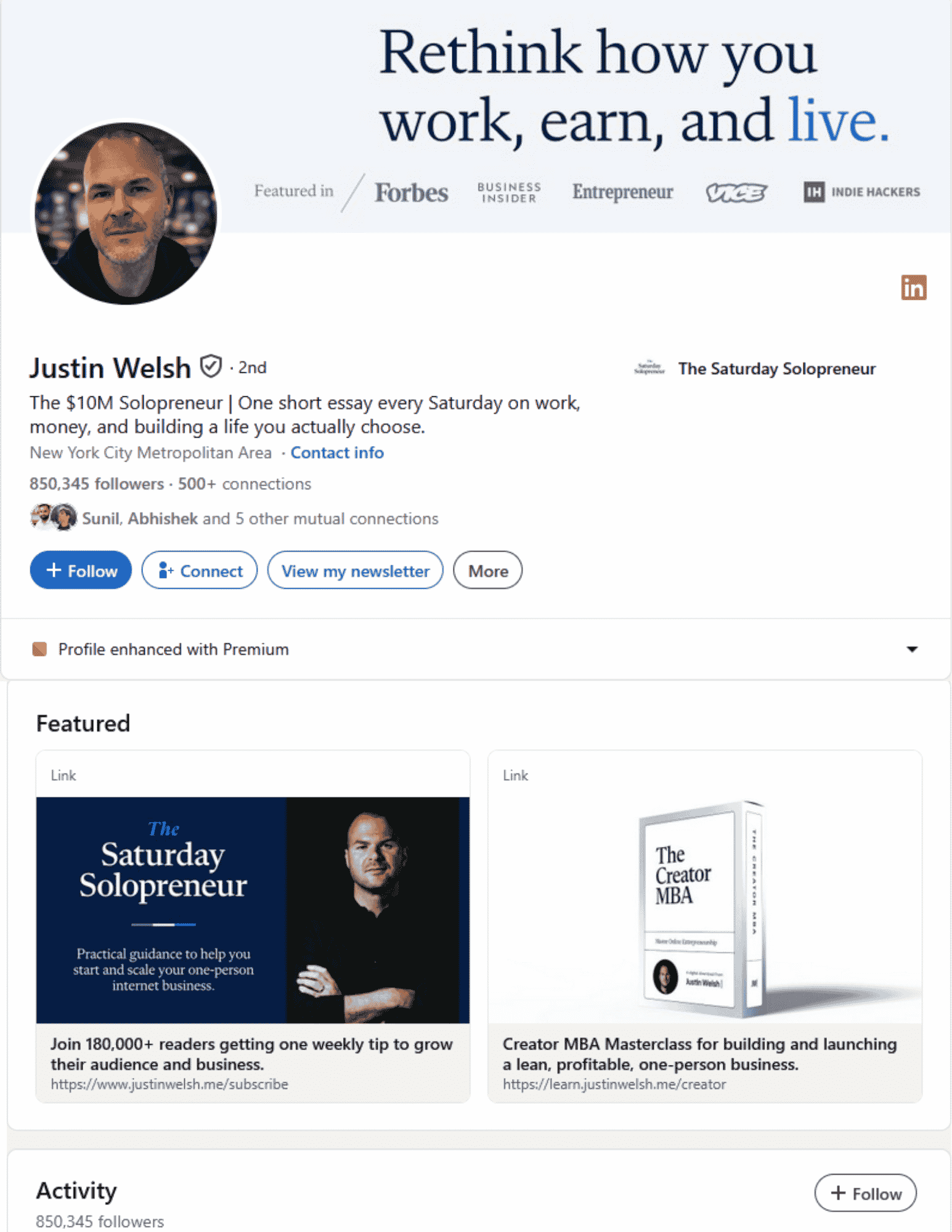
Justin Welsh is a solid example of building a personal brand on LinkedIn by keeping things simple and sticking to it.
What works in his strategy:
- Clear niche: Solopreneurs, systems, and growth
- Simple, repeatable content: Short, structured, easy to read
- Strong storytelling: Lessons over generic advice
- Consistency: Shows up regularly, without fail.
He doesn’t jump across topics or trends. He stays in his lane and builds depth.
That’s what makes his LinkedIn personal branding strategy work.
2. Sahil Bloom
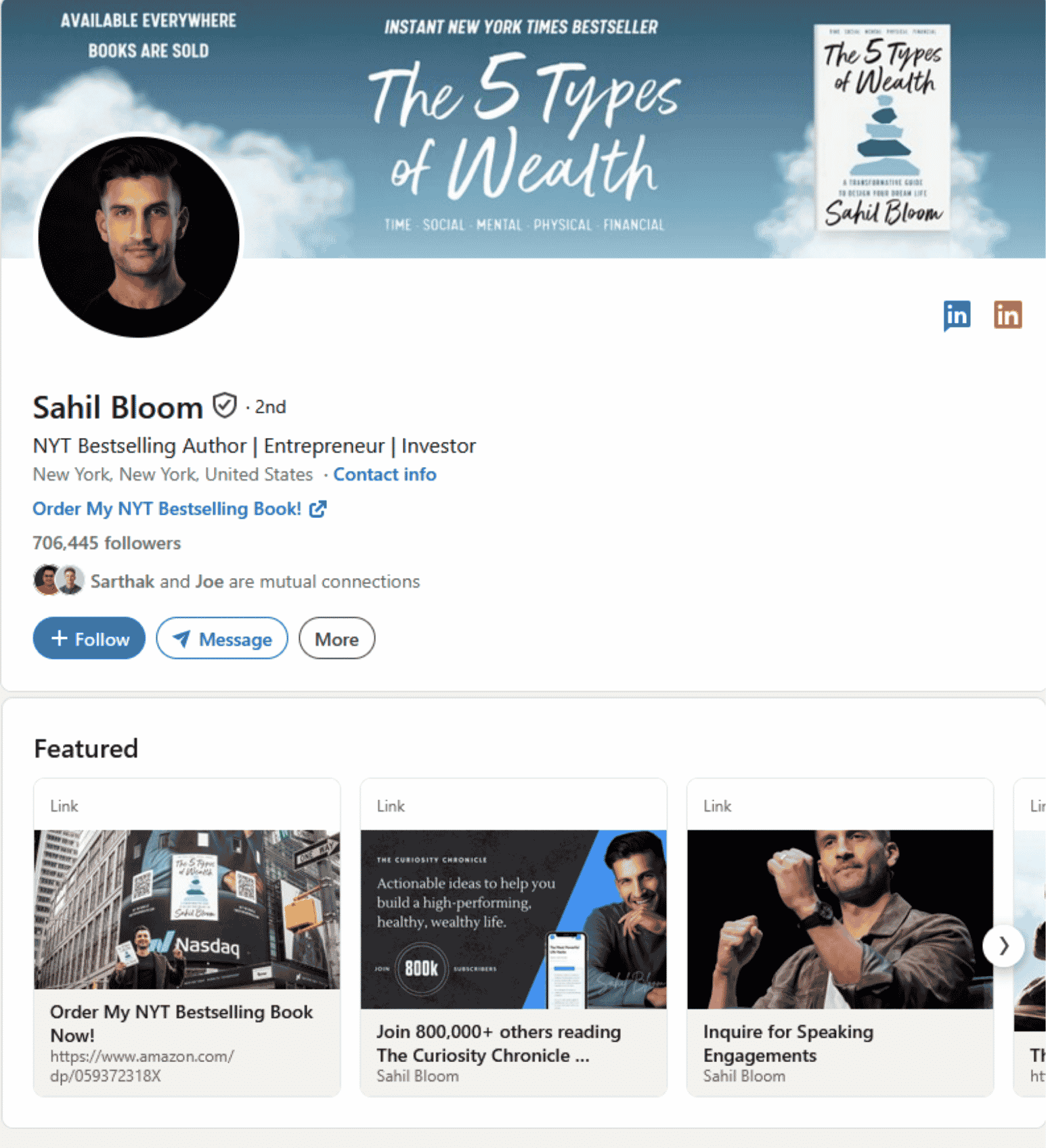
Sahil Bloom’s approach to personal branding on LinkedIn is more structured, but just as effective.
What works in his strategy:
- Educational-first content: Breaks extremely complex ideas into simple, bite-sized ideas.
- Strong hooks: He understands the value of the attention currency and uses catchy hooks, like, “Whenever I feel anxious, I ask myself this question.”
- Clean formatting: Easy to skim, understand, and remember. Also, easy on the eyes.
- Consistent positioning: Same themes across platforms
His content feels intentional.
Don’t copy him, but learn from him by being authentic and understandable. People are likely to come back to something they get right away.
3. Codie A. Sanchez
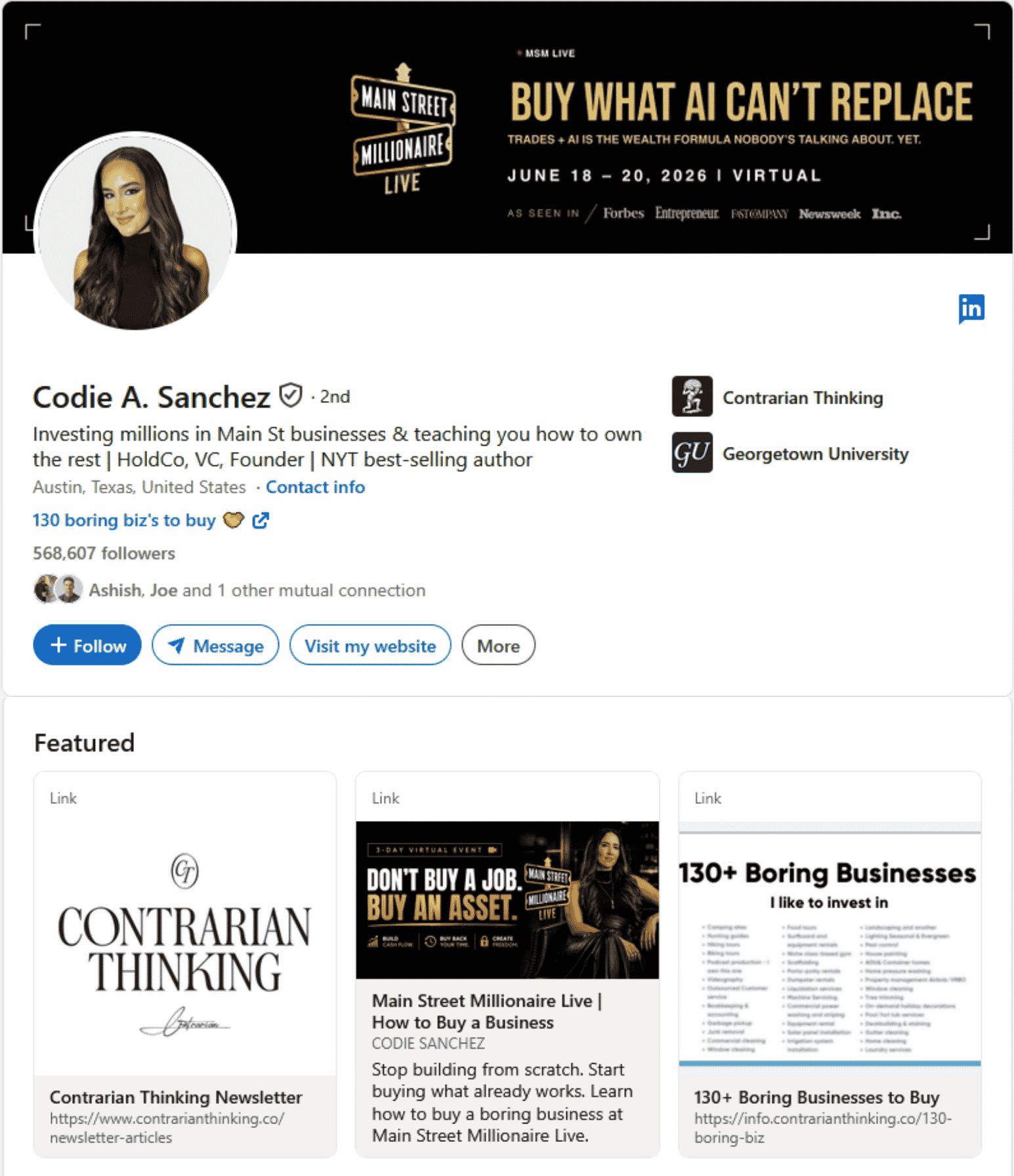
Codie A. Sanchez stands out because she leans hard into her point of view and doesn’t soften it.
Her personal branding on LinkedIn works because it’s distinct.
What works in her strategy:
- Strong opinions: Clear, direct takes that invite reactions
- Contrarian angles: Challenges conventional thinking
- Story-led content: Real-world insights over theory
- Clear niche: “Boring businesses” and wealth-building
Her posts don’t try to please everyone, and that’s exactly why they work.
Because in building your personal brand on LinkedIn, playing it safe rarely gets remembered.
How to Measure Whether Your LinkedIn Brand Is Growing?
Don’t just chase likes.
Track:
- Profile views
- Follower quality (not just quantity)
- Comments & conversations
- Inbound leads/opportunities
Because the real ROI of building your personal brand on LinkedIn is opportunities, not impressions.
The Final Note
Building a personal brand on LinkedIn is no longer optional for professionals who want visibility, trust, and long-term opportunities. You don’t need to become a creator overnight. You need consistency, clarity, and a perspective people remember.
Start by defining your niche, share what you genuinely care about, and engage with people consistently. Over time, your content becomes your credibility.
Frequently Asked Questions
First and foremost, make an account, define your niche, optimize your profile, and post consistently with value-driven content.
A minimum of 2 times per week, but not daily, is enough if you’re consistent and engaging.
For personal branding on LinkedIn to be top-notch, mix relatable content, daily life happenings, learnings, milestones, opinions, and case studies.
We don’t think you should expect anything before 3 months, even if you stay consistent, since the game is about visibility and value.
Yes. It builds trust faster than company branding and drives inbound opportunities.
Absolutely. Consistency matters more than frequency.
Embed social feed from Facebook, YouTube, Instagram, Twitter on your website, like a PRO
Invalid Email Address Multiple Themes