How to Embed a Mastodon RSS Feed on Your Website
TL;DR
- The RSS feed of Mastodon lets you pull public posts from a Mastodon profile or hashtag into another platform.
- Find the Mastodon URL for the RSS feed for the profile or hashtag you want to display.
- Connect the feed to a social media aggregator and turn it into a customizable Mastodon feed widget.
- Adjust the layout, design, moderation, and display settings to fit your website.
- Generate the embed code and embed Mastodon RSS feed content on your website.
- Add the widget to HTML, WordPress, Wix, Shopify, Squarespace, or another supported platform.
- Once published, the widget can display new Mastodon posts on website pages without manually adding each update.
Boost Engagagement, Traffic & Conversion By Embedding Mastodon RSS Feed On Your Website
Try for freeAt-a-Glance
| Feed Types | Feed URL Pattern | Example | Best Use Case |
| Profile Feed | https://[instance]/@[username].rss | [https://mastodon.social/@Mastodon.rss](https://mastodon.social/@Mastodon.rss) | Showcase your brand’s latest public posts and updates. |
| Hashtag Feed | https://[instance]/tags/[hashtag].rss | [https://mastodon.social/tags/technology.rss](https://mastodon.social/tags/technology.rss) | Aggregate public posts for campaigns, events, or topics. |
| Local Timeline | https://[instance]/timeline/local.rss | [https://mastodon.art/timeline/local.rss](https://mastodon.art/timeline/local.rss) | Display community activity from a single server instance. |
Mastodon can be a useful source of fresh content for your website. However, your website visitors may never see those posts on the platform. A Mastodon RSS feed gives you a simple way to bring that content onto your site. You can turn the feed into a Mastodon feed widget and place it wherever visitors can see it. This guide explains how to find your Mastodon feed URL and add it to your website. You will also learn how to customize the feed and display Mastodon posts across popular website platforms.
What Is a Mastodon RSS Feed?
Mastodon is a decentralized social platform where people share posts, links, images, and conversations. People join independent servers called instances, which connect through a shared network. A Mastodon RSS feed is an automatically updated XML feed that allows you to syndicate public posts from a specific Mastodon profile or hashtag without needing an account or third-party integration.
RSS, or Really Simple Syndication, provides a standard way to distribute frequently updated content in the form of academic RSS feeds and more. Mastodon can generate RSS feeds for public profiles and hashtags. Each RSS feed of Mastodon provides content from the specific profile or hashtag that you select.
How Does Mastodon Work?
Mastodon organizes users across independent instances, while federation connects those instances. Users publish posts from their profiles, and hashtags help organize public posts around specific topics. These elements also determine the content that an RSS feed can collect.
What Can You Get From a Mastodon RSS Feed?
A Mastodon URL gives compatible tools access to the feed’s available posts. Profile feeds focus on posts from one account, while hashtag feeds collect public posts using that hashtag. You can explore RSS feed examples to see how different feeds structure and distribute content.
| Feed type | Content |
| Profile feed | Posts from a specific Mastodon account |
| Hashtag feed | Public posts associated with a specific hashtag |
You can connect these feeds to tools that help display Mastodon feed on website pages. For example, a widget can present selected Mastodon content without manual copying.
Why Display a Mastodon Feed on Your Website?
Your website can extend the value of your Mastodon activity beyond the social platform. A Mastodon feed brings your latest updates and relevant conversations directly to your site.
- Increase Brand Visibility
Show your Mastodon activity to visitors who may not follow your social profile yet. This gives your brand another touchpoint during their website journey. - Build Trust
Recent posts can show that your brand actively participates in conversations. This can give visitors a clearer view of your brand and its interests. - Showcase Community Activity
Hashtag feeds can bring relevant conversations around events, campaigns, or industry topics. This works well for brands that actively engage with their communities. - Reuse Existing Content
Your team can give Mastodon posts another place to reach your audience. You can display useful updates without recreating the same content for your website. - Save Content Management Time
A Mastodon feed widget can pull new posts into your website as the source updates. This reduces the need to add social posts manually.
You can also explore our Social Media Widget to learn more about displaying social content on websites.
How to Get Your Mastodon RSS Feed URL
You can get the feed URL directly from a public profile or hashtag page. Mastodon provides RSS feeds for both account and tag pages, so you can use either source for your website.
Get Your Mastodon Profile RSS Feed
Open the public Mastodon profile that you want to use. Add .rss to the profile URL to access its feed. For example, a profile such as https://mastodon.social/@Mastodon uses https://mastodon.social/@Mastodon.rss. Mastodon also makes these feeds discoverable from account pages. The feed contains the account’s public posts, so check the profile before using its URL.
Get a Mastodon Hashtag RSS Feed
Open the Mastodon page for your chosen hashtag. Add .rss to the hashtag page URL to access its feed. For example, https://mastodon.social/tags/technology becomes https://mastodon.social/tags/technology.rss. Mastodon confirms that tag pages provide RSS feeds for syndication on other platforms.
Check Your Mastodon RSS Feed
Open the feed URL in your browser before connecting it to a widget. A working feed should return structured feed content rather than a normal Mastodon webpage. Also check that the feed contains recent public posts from your selected source. Once the feed works, you can use it to embed Mastodon feed on website content on your website.
How to Embed a Mastodon RSS Feed With Tagembed
Tagembed lets you turn a Mastodon feed into a customizable website widget. You can connect the feed, adjust its appearance, and publish it without building the display yourself. The process also supports moderation and responsive widget displays.
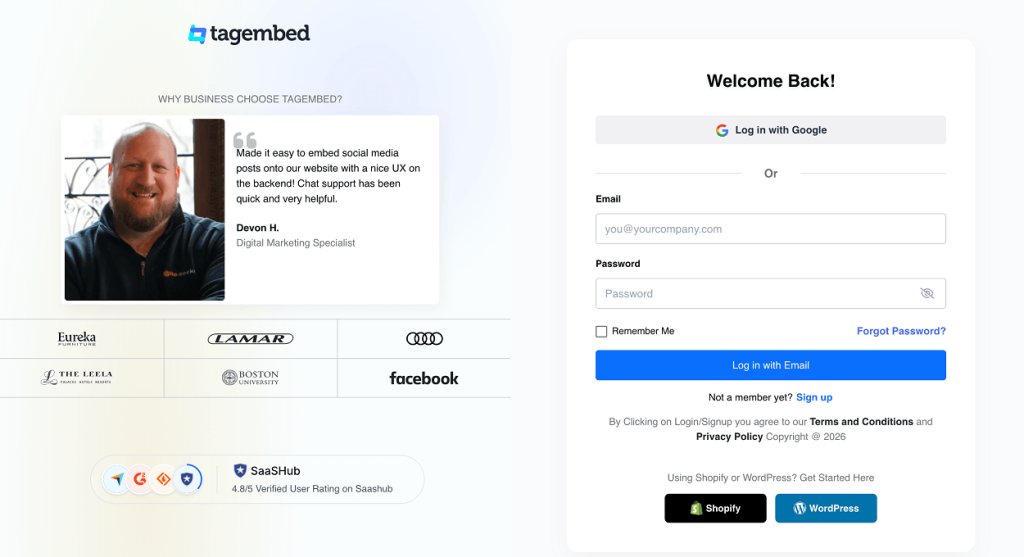
Step 1: Create a Tagembed Account
- Sign up for a Tagembed account or log in to your existing account.
- Open the Tagembed dashboard.
- Select a source network and start creating your widget.
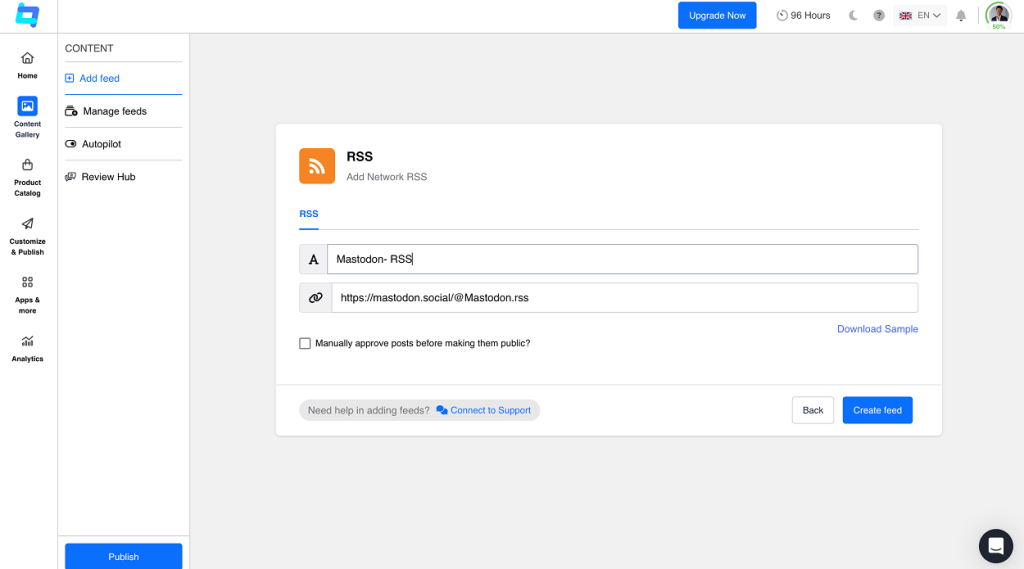
Step 2: Add Your Mastodon RSS Feed
- Choose the RSS source network from the available content sources.
- Enter a display name for your feed.
- Paste your Mastodon feed URL in the Feed URL field and add “.rss” at the end.
- Click “Create Feed” to start collecting the content.
Once Tagembed collects the feed, check that your Mastodon posts appear correctly.
Step 3: Customize Your Mastodon Feed Widget
- Open the “Customize & Publish” option for your widget.
- Choose a suitable layout and adjust the design.
- Change colors, fonts, backgrounds, and other available styling options.
- Use moderation controls to filter unwanted content.
- Preview the widget with the “Desktop” and ”Mobile” options before publishing it.
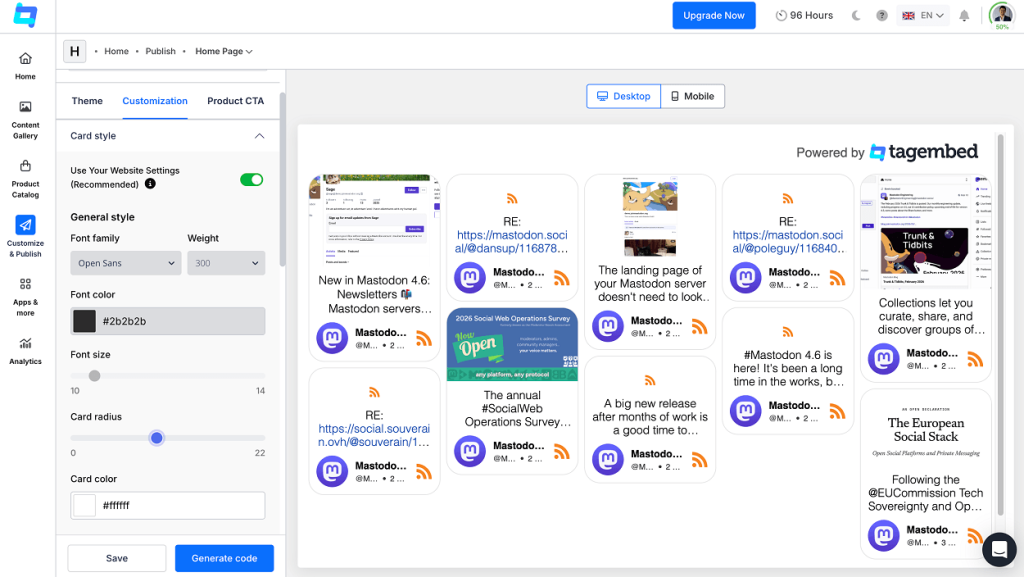
These options help you create a Mastodon feed widget that fits your website.
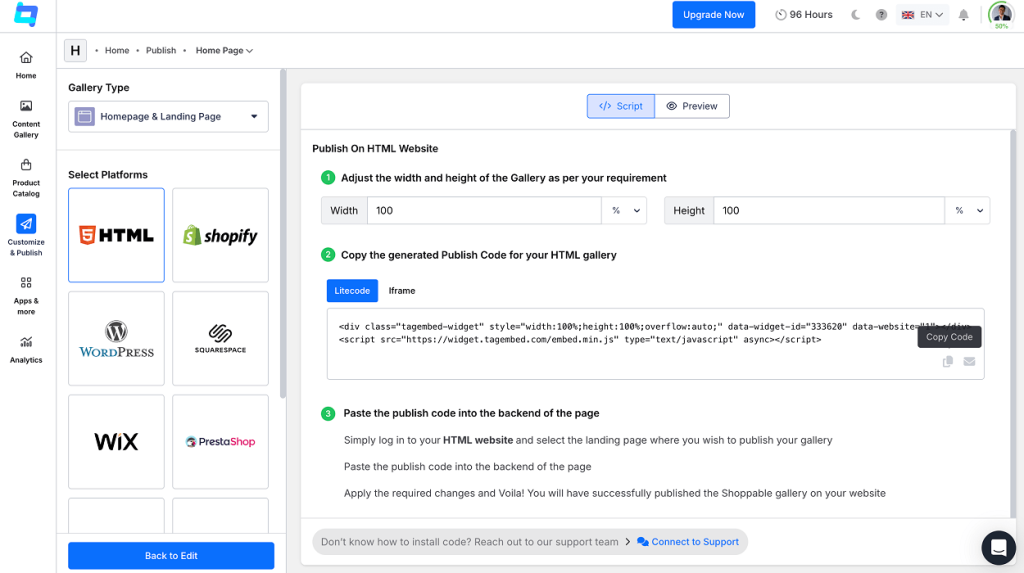
Step 4: Generate the Embed Code
- Click Generate Code after finishing your customization.
- Select your website platform from the available options.
- Adjust the widget height and width when needed.
- Copy the generated embed code.
Step 5: Add the Widget to Your Website
- Open the page where you want to display your Mastodon feed.
- Follow the embedding method for your website platform.
- Paste the generated code or use the supported integration method.
- Save your changes and preview the published widget.
For example, WordPress users can use the Tagembed WordPress plugin or Custom HTML as a suitable option. Other platforms provide their own areas for adding embedded content.
Your Mastodon RSS feed widget for website pages can now display content from the connected feed. With this social media aggregator, you can also update the widget as new RSS content becomes available.
Boost Engagement & Keep Visitors Connected With Your Latest Posts
Try for freeHow To Embed Mastodon RSS Feed on Different Website Platforms
You can add the same Mastodon feed widget to different website platforms. The exact steps vary because each platform handles custom code differently.
| Platform | Where to add the widget | How to add it | Important note |
| HTML | Your webpage’s HTML file | Paste the code inside the <body> section, then save the file. | Make sure the page uses HTTPS and the code remains unchanged. |
| WordPress | Page or post editor | Add a Custom HTML block and paste the code. | You can also use a dedicated RSS aggregator plugin or a shortcode block. |
| Wix | Wix Editor | Add an Embed Code element, choose Embed HTML, then paste the code. | Wix requires embedded code to use HTTPS. |
| Shopify | Theme editor | Use a compatible app block, app embed, or Custom Liquid section. | Available options depend on your theme and the widget integration. |
| Squarespace | Page editor | Add an embed Code block and paste the code. | JavaScript and iframe support can depend on your Squarespace plan. |
| Other builders | HTML, embed, or custom-code area | Select Other in the tool when needed, copy the generated code, and paste it into your platform’s supported area. | Check whether your platform allows third-party embeds before publishing. |
Before You Publish
- Preview the widget: Confirm that your Mastodon content loads correctly.
- Check mobile display: Widget dimensions can affect smaller screens.
- Test the feed URL: In case the widget shows no content, you can correct it right there.
- Keep the embed code intact: This is helpful for the widget to load and update correctly.
- Check platform restrictions: When your website builder limits custom HTML, JavaScript, or iframe content, you must be thorough with the rules.
This approach lets you embed Mastodon RSS feed content without creating separate RSS feed plugins for WordPress or every website platform. You create the widget once in the widget builder, then use the appropriate embedding method for your website.
Customize Your Mastodon Feed Widget
Once your feed connects, you can adjust how it looks and behaves on your website. Tagembed provides several controls that help you present Mastodon posts on website pages without changing your original Mastodon content.
Choose a Layout
- Select a layout that matches the amount and type of content you want to show.
- Use card, slider, grid, or other available layouts based on your page design.
- Choose a compact layout when space is limited, such as a sidebar.
Match Your Website Design
- Adjust fonts, colors, backgrounds, spacing, and other visual elements.
- Customize the feed so it feels consistent with your website’s existing design.
- Use custom CSS when the standard design controls do not provide enough flexibility.
Moderate and Filter Content
- Review collected content before displaying it publicly when moderation is needed.
- Remove posts that do not fit your website’s purpose or audience.
- Use moderation controls to keep the feed focused and relevant.
Keep the Feed Updated
- Let the widget fetch new content from your connected RSS source.
- This reduces the need to replace or update individual posts manually.
- Refresh behavior can vary based on your Tagembed plan and feed source.
Make the Widget Responsive
- Check how the Mastodon feed widget appears across different screen sizes.
- Adjust its dimensions so it fits desktop, tablet, and mobile layouts.
- Preview the widget before publishing to catch spacing or display issues.
These controls help you create a Mastodon RSS feed widget for website pages that feels native to your site’s design. You can also explore our Social Media Aggregator for broader ways to collect and display social content.
Best Ways to Display Mastodon Posts on Your Website
The right placement depends on the type of Mastodon content you want visitors to see. A Mastodon feed widget can fit several website areas without making the page feel crowded.
Add A Mastodon Feed Widget to the Homepage
Show recent posts where visitors can quickly discover your latest activity. This placement works well when Mastodon plays an active role in your brand communication.
Create a Dedicated Social Section
Use your feed to show how your brand participates in wider conversations. This works especially well for organizations that use Mastodon to engage with their communities.
Around Relevant Content
Place a related Mastodon feed beside blog posts, resources, or topic pages. A hashtag feed can add current public discussions around the subject covered on that page.
On Campaign Pages
Use a campaign-specific hashtag to collect related posts in one place. Mastodon’s hashtag system helps people discover public posts around shared topics.
On Event Pages
Display posts from an event hashtag to give visitors a view of ongoing conversations. This can work well for conferences, launches, community events, and online campaigns.
On a Dedicated Social Page
Create one page that brings together your social activity when your brand maintains several active channels. You can use a Mastodon feed alongside other social sources to keep the page current.
Choose the placement based on the content’s purpose rather than adding a feed everywhere. For more ideas, see our guide on embedding social media feeds on a website.
Showcase Fresh Mastodon Content And Turn Visitors Into Engaged Followers
Try for freeBenefits of Adding a Mastodon Feed to Your Website
A Mastodon feed can do more than show social updates on a website. It can also make existing content easier to reuse and maintain.
- Keep Content Updated
RSS can deliver new posts from your selected Mastodon source. This helps your website reflect recent activity without rebuilding the feed each time. - Reduce Publishing Work
Once you embed a Mastodon feed on website content, the widget handles the display. Your team can avoid copying individual posts into website pages. - Extend Your Content Reach
Your Mastodon posts can reach people who visit your website but rarely check social platforms. This gives existing content another place to work. - Create A Consistent Display
A Mastodon feed widget lets you control layouts, fonts, colors, and spacing. You can therefore match the feed with your website’s visual style. - Support Different Website Experiences
You can place the feed on homepages, campaign pages, event pages, or relevant content sections. This gives each feed a clear purpose. - Get More From Your Social Activity
Your team already creates posts for Mastodon. Displaying them on your website helps you reuse that work across another digital channel.
Common Mastodon RSS Feed Embedding Issues
A Mastodon feed usually works once the feed URL and widget settings are correct. If something goes wrong, check these common issues first.
The RSS Feed Does Not Load
- Problem: The widget shows no content after you add the feed.
- Check: Open your Mastodon feed URL directly in a browser.
- Fix: Confirm that the URL works and contains available content before reconnecting it.
Mastodon Posts Do Not Appear
- Problem: The connection to the feed is established, yet there are no posts showing up.
- Check: Confirm that the source contains public posts.
- Fix: The RSS feeds of Mastodon contain only those posts which have been shared publicly. Posts that are unlisted, available only to followers, and direct messages do not appear in .rss feeds.
Content Warnings Hide Post Text
- Problem: A post appears without its full text.
- Check: Open the original Mastodon post and look for a content warning.
- Fix: Mastodon’s RSS output retains the content warning structure. Readers may need to open the original post to view the hidden content.
The Feed Does Not Update
- Problem: New Mastodon posts do not appear on the website.
- Check: Make sure automatic updates remain enabled in your widget.
- Fix: Check your widget’s update settings and allow time for the next refresh. Tagembed notes that disabled auto-update can stop feeds from refreshing.
Images or Media Do Not Appear
- Problem: Posts load, but attached images or media remain missing.
- Check: Open the original Mastodon post and verify that its media still loads.
- Fix: Recheck the source feed and refresh the widget if the media source has changed.
The Widget Looks Incorrect
- Problem: Your Mastodon feed widget does not fit the page correctly.
- Check: Review its width, height, layout, and responsive settings.
- Fix: Adjust the widget dimensions and preview it across different screen sizes.
The Feed Stops Loading Temporarily
- Problem: A direct feed request may fail or slow down temporarily.
- Check: Open the feed URL directly and see whether the Mastodon instance responds normally.
- Fix: Check the instance status and try the feed again later. Instance administrators can apply rate limits to requests, so repeated direct requests may not always return immediately.
If these checks do not solve the problem, review your Mastodon feed URL and widget settings before changing your website code.
Conclusion
Adding a Mastodon Feed to your website does not require a complicated setup. First, find your RSS feed URL for Mastodon and connect it to a widget builder. Then, customize the feed and generate your embed code. Finally, add the widget to your website and check its display. Once everything works, your website can show fresh Mastodon content with less manual work. Tagembed also lets you manage the widget’s design and content from one place.
FAQs
Yes, Mastodon provides RSS feeds for account and hashtag pages. These feeds are automatically discoverable from their respective pages. You can use the feed to distribute public Mastodon content through compatible tools or display it on another website.
Open the public Mastodon account or hashtag page you want to use. Mastodon provides an RSS feed for both types of pages. You can then use its feed URL with an RSS-compatible tool, such as a Mastodon feed widget, to display the content elsewhere.
Yes, you can embed Mastodon RSS feed content on your website using an RSS widget. An RSS widget builder lets you add your feed URL, customize the layout, and generate a simple embed code for your platform. You can then place the code where you want to display the feed.
Yes, you can display a public Mastodon hashtag feed on your website. Mastodon provides RSS feeds for tag pages, which lets compatible tools collect that content. You can then use a Mastodon RSS feed widget to present those posts on your website.
No, you do not need coding skills when you use a no-code RSS widget. Tagembed lets you add your Mastodon feed URL, customize the display, and copy the generated embed code. You then paste that code into your website’s supported embed or HTML area.
Embed social feed from Facebook, YouTube, Instagram, Twitter on your website, like a PRO
Invalid Email Address Multiple Themes