11 Best Yotpo Alternatives for Reviews, UGC & Social Proof in 2026
Yotpo built its reputation as an all-in-one reviews and loyalty platform, and for enterprise brands with deep pockets, it still holds up. But many businesses hit a wall with it. Pricing scales fast, setup often needs developer involvement, and the feature set is overkill if you mainly need solid review widgets and UGC on your website.
That’s why searches for “Yotpo alternatives” have been climbing. Brands across ecommerce, SaaS, and hospitality want platforms that collect and display customer reviews more affordably, plug into social proof workflows without heavy lifting, and provide UGC tools that drive conversions rather than just sit on the page.
What actually matters when you’re switching? Multi-source review aggregation, flexible embedding, pricing that doesn’t punish growth, customization you can handle without a dev, and moderation controls that don’t become a daily chore.
This guide covers 11 platforms worth considering in 2026, what each does well, where it falls short, and who it’s actually built for.


TL;DR
The best Yotpo alternative depends on whether you need review collection, review display, UGC management, loyalty programs, or SMS marketing.
- For review widgets, social proof, UGC feeds, and shoppable galleries, Tagembed is the strongest all-around alternative, supporting 15+ platforms starting at $19/month.
- For enterprise UGC campaigns, content rights management, and live event displays, Taggbox is a better fit.
- For third-party review collection and reputation management, Trustpilot remains one of the most trusted platforms.
- For Shopify product reviews, customer attributes, and visual UGC, Okendo is one of the strongest ecommerce-focused options.
- For reviews and loyalty on a budget, Stamped.io offers the best balance of affordability and features.
- For customer loyalty, rewards, and retention programs, LoyaltyLion offers the most comprehensive loyalty capabilities on this list.
Most businesses don’t need to replace Yotpo’s entire marketing stack. They need a better solution for reviews, social proof, UGC, loyalty, or customer retention. Below, we compare the best Yotpo alternatives based on pricing, features, integrations, and ideal use cases to help you choose the right platform.
Key Takeaways
- Yotpo is a powerful platform, but many businesses end up paying for features they rarely use.
- Review collection, review display, UGC management, loyalty programs, and SMS marketing are often better served by specialized tools.
- Shopify brands may benefit from ecommerce-focused platforms like Okendo, while businesses prioritizing social proof and UGC may find more value in Tagembed or Taggbox.
- Several Yotpo alternatives start below $20/month, making them more accessible for growing brands and smaller teams.
- Before switching, identify whether you’re replacing reviews, UGC, loyalty, SMS, or the entire customer marketing stack.
Quick Comparison: 11 Best Yotpo Alternatives in 2026
| Tool | Best For | Starting Price | Key Strengths |
| Tagembed | Reviews + UGC + Social Feeds | $19/mo | Multi-source aggregation, shoppable UGC, AI moderation |
| Taggbox | Enterprise UGC & Rights Management | $19/mo | High-volume UGC, digital signage, rights management |
| Trustpilot | Brand Reputation & Review Collection | Custom | Global trust signal, SEO-rich review pages |
| Okendo | Ecommerce Reviews & Attributes | $19/mo | Deep Shopify integration, visual reviews, attributes |
| Stamped.io | Reviews + Loyalty for Shopify | $199/mo | Combined reviews + loyalty, affordable for SMBs |
| Reviews.io | Multi-Channel Review Collection | $89/month | SMS + email collection, Google Seller Ratings |
| Birdeye | Reputation Management for Local Brands | Custom | Multi-location, Google/Facebook review automation |
| Podium | Local Business Reviews via SMS | Custom | Text-based review collection, local SEO |
| Bazaarvoice | Enterprise-Scale Syndication | Custom | Retail syndication, massive brand network |
| Klaviyo | Email/SMS Marketing + Reviews | $20/mo | Review collection within existing marketing flows |
| LoyaltyLion | Customer Loyalty + Reviews | $199/mo | Loyalty programs tied to review incentives |
Are You Replacing Yotpo’s Widgets or Yotpo’s Marketing Stack?
Before jumping into the list, it’s worth being honest about what Yotpo actually is. Most people think of it as a review tool, but Yotpo has grown into a full customer marketing platform that covers reviews, visual UGC, SMS marketing, loyalty programs, and subscriptions. That means people searching for “Yotpo alternatives” are often trying to replace very different things.
If you mainly want to review widgets and social proof displays on your website, tools like Tagembed, Okendo, or Stamped.io cover that well and cost a fraction of what Yotpo does.
If you’re replacing Yotpo’s SMS and email marketing stack, Klaviyo is the most direct replacement and likely already in your tech stack.
If it’s the loyalty program you’re walking away from, LoyaltyLion goes deeper on retention mechanics than Yotpo ever did.
Not all Yotpo alternatives serve the same purpose, so some are covered in more detail than others.
Build Trust Faster with Reviews, UGC, and Social Proof Widgets.
Try For Free11 Best Yotpo Alternatives in 2026
1. Tagembed — Best Overall Yotpo Alternative

Tagembed is a social media aggregation and review widget platform that pulls content from 20+ platforms, including Google, Facebook, Amazon, Yelp, TripAdvisor, Instagram, TikTok, and more, and lets you embed it anywhere on your site. Unlike Yotpo, which primarily focuses on reviews and loyalty, Tagembed combines customer reviews, UGC feeds, visual galleries, shoppable content, and review widgets for websites in one platform.
It’s a strong fit for ecommerce brands that want to combine Amazon Reviews widgets, Instagram Feed widgets, and Google Reviews in a single embeddable widget without relying on multiple tools.
Key Features
- Multi-source review aggregation from Google, Facebook, Amazon, Yelp, TripAdvisor, Etsy, Airbnb, and AliExpress
- Social media feeds from Instagram, TikTok, YouTube, LinkedIn, Pinterest, and more
- Shoppable Instagram and TikTok galleries with product tagging
- AI-powered moderation, AI Summarizer, AI Review Writer, and sentiment analysis
- Real-time syncing with CDN-backed delivery for faster page loads
- Built-in rating schema markup for SEO benefits
- One-click embeds for WordPress, Shopify, Wix, Webflow, Squarespace, and more
- eCommerce product reviews display with full customization control
Pricing
Free plan available. Paid plans start at $19/month and scale to enterprise-level custom solutions.
Pros
- Combines reviews and social UGC in one platform
- More affordable than Yotpo
- No developer required for setup
- AI tools help manage content at scale
- Supports review schema markup for search visibility
Cons
- Free plan is limited to one feed and 500 monthly views
- Advanced AI features are only available on higher-tier plans
- Does not offer post-purchase review collection or automated review request campaigns
Best For: Ecommerce brands that want review widgets, UGC displays, shoppable feeds, and visual reviews for eCommerce without enterprise-level pricing.
2. Taggbox — Best for Enterprise UGC & Rights Management
Taggbox is a UGC platform built for brands that need more than a feed widget. Think large-scale content campaigns, digital signage walls, and proper content rights management before repurposing customer posts. It’s strong for event-based displays and brands running hashtag campaigns across Instagram and TikTok.
Compared to Tagembed, Taggbox is heavier on rights management and live display, and lighter on review aggregation. If you’re running a high-traffic ecommerce site focused on Google and Amazon review widgets, Tagembed is the better fit. If you’re managing UGC at event scale or need documented content rights before using customer photos in ads, Taggbox is worth considering.
Key Features
- UGC collection from Instagram, TikTok, Facebook, YouTube, and Twitter/X
- Content rights request workflows for legally repurposing UGC
- Digital signage and event wall capabilities
- Advanced moderation with manual and rule-based auto-approval
- Analytics for engagement and content performance
Pricing: Starts at $19/month. Higher tiers needed for multiple feeds and advanced features.
Pros
- Strong for live event displays and digital signage
- Content rights management built in, useful for brands running paid ads with UGC
- Good for high-volume hashtag campaign aggregation
Cons
- Less focused on review widget embedding compared to Tagembed
- Can get expensive for high-traffic or multi-feed setups
- Steeper learning curve for teams new to UGC platforms
Best For: Enterprise brands, agencies, and event organizers managing large UGC campaigns that need rights management and digital display capabilities.
3. Trustpilot — Best for Brand Reputation & Third-Party Trust
Trustpilot operates differently from most tools on this list. It’s not just a widget platform but a publicly indexed review platform where consumer trust is built through independently verified reviews. A strong Trustpilot rating carries weight because it exists outside your website, which no embed tool can replicate.
The trade-off: Trustpilot is expensive for smaller businesses, and you have limited control over which reviews are publicly visible. Negative reviews stay visible. That’s actually what makes it credible to consumers, but it requires a different mindset than curating your best reviews through a widget.
Key Features
- Publicly indexed review pages that appear in Google search results
- Automated review invitation emails post-purchase
- TrustBox widgets for embedding reviews on your website
- Google Seller Ratings integration
- Review analytics and competitive benchmarking
Pricing: Free plan available with limited features. Paid plans are custom-quoted.
Pros
- One of the most recognized third-party review platforms globally
- Public Trustpilot page acts as an independent credibility signal
- Strong SEO value, as Trustpilot pages often rank in search results
Cons
- Negative reviews are publicly visible and can’t be hidden
- Paid plans can be expensive, especially for SMBs
- Limited customization for widget display compared to dedicated widget tools
Best For: Brands where third-party credibility matters more than controlled display, particularly B2B SaaS, finance, and ecommerce businesses targeting trust-sensitive buyers.
4. Okendo — Best for Ecommerce Review Attributes & Visual UGC
Okendo is a Shopify-native reviews platform that goes deeper than star ratings. It captures structured review data size, fit, quality, style – alongside photos and videos, which makes it particularly valuable for fashion, beauty, and consumer goods brands where product attributes influence purchase decisions.
It’s a strong Yotpo alternative for Shopify merchants who want richer product review data and visual UGC without the Yotpo price. The limitation is that Okendo is built for Shopify first. If you’re on WooCommerce, BigCommerce, or a custom stack, the experience is thinner.
Key Features
- Attribute-based reviews (size, fit, quality, etc.) alongside star ratings
- Photo and video review collection
- Automated post-purchase review request emails and SMS
- Loyalty rewards for leaving reviews
- Integration with Klaviyo, Gorgias, and other Shopify ecosystem tools
Pricing: Starts at $19/month for up to 500 orders.
Pros
- Deep Shopify integration with native checkout and order data
- Attribute reviews help shoppers make better decisions and reduce returns
- Clean, customizable review widget display
Cons
- Primarily built for Shopify, limited value on other platforms
- Costs scale with order volume, which gets expensive for high-GMV stores
- No social media feed aggregation
Best For: Shopify merchants in fashion, beauty, or consumer goods who need structured product-attribute reviews and visual UGC to reduce decision-making friction.
5. Stamped.io — Best for Combined Reviews + Loyalty on a Budget
Stamped.io positions itself as a Yotpo alternative covering reviews, ratings, NPS, and loyalty programs in a single platform at a price point mid-market ecommerce brands can afford. It’s not as feature-deep as Yotpo on the loyalty side, but for brands that want basic loyalty tied to review collection without paying Yotpo’s rates, it works well.
Key Features
- Photo and video review collection with automated email and SMS requests
- Net Promoter Score surveys
- Loyalty and rewards program builder
- Google Shopping and Seller Ratings integration
- Compatible with Shopify, WooCommerce, and BigCommerce
Pricing: Starts at $199/month for the Lite plan.
Pros
- Reviews and loyalty in one platform at a reasonable price
- Works across multiple ecommerce platforms, not just Shopify
- Google Seller Ratings support helps review content appear in paid search
Cons
- Loyalty features are less sophisticated than dedicated tools like LoyaltyLion
- Review widget customization is more limited than standalone widget platforms
- Support quality can vary on lower-tier plans
Best For: Growing ecommerce brands on Shopify or WooCommerce that want reviews and basic loyalty tied together without the Yotpo price jump.
Showcase Reviews and UGC That Influence Purchase Decisions.
Start Free Today6. Reviews.io — Best for Multi-Channel Review Collection
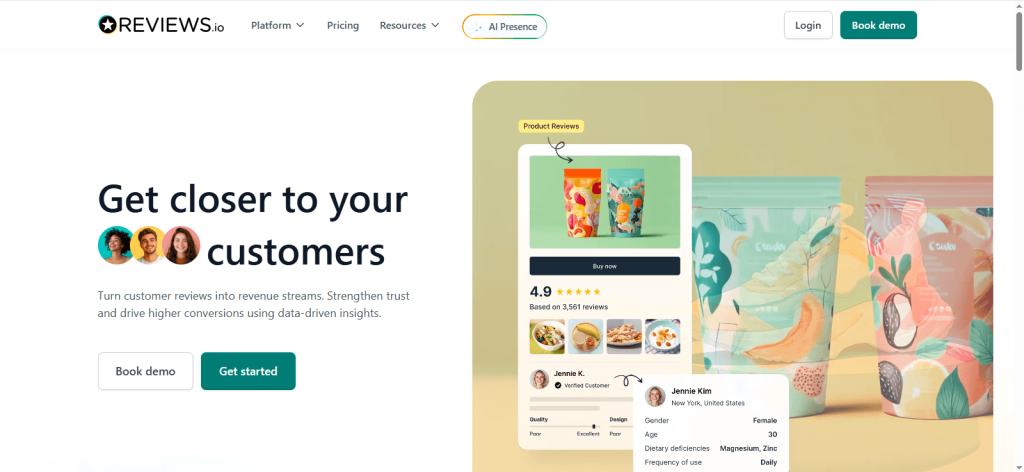
Reviews.io differentiates on how it collects reviews: SMS, email, in-store, and printed QR codes, which makes it one of the more flexible platforms for businesses that interact with customers across multiple touchpoints. It also has strong Google Seller Ratings integration, meaning your review count can appear directly in Google Shopping ads.
Key Features
- Multi-channel review collection via SMS, email, in-store, and QR codes
- Google Seller Ratings and Product Review feeds
- Photo and video review support
- Review syndication across multiple platforms
- Customizable display widget builder
Pricing: Starts at $29/month.
Pros
- Strongest multi-channel review collection on this list
- Google Seller Ratings integration is genuinely valuable for paid search
- Solid review syndication for brands selling across multiple channels
Cons
- Higher starting price than most alternatives
- Widget customization is functional but not as flexible as dedicated embed tools
- More platform than smaller brands typically need
Best For: Ecommerce brands heavily invested in Google Shopping who need review collection across multiple customer touchpoints, especially those running SMS marketing alongside email.
7. Birdeye — Best for Multi-Location Reputation Management
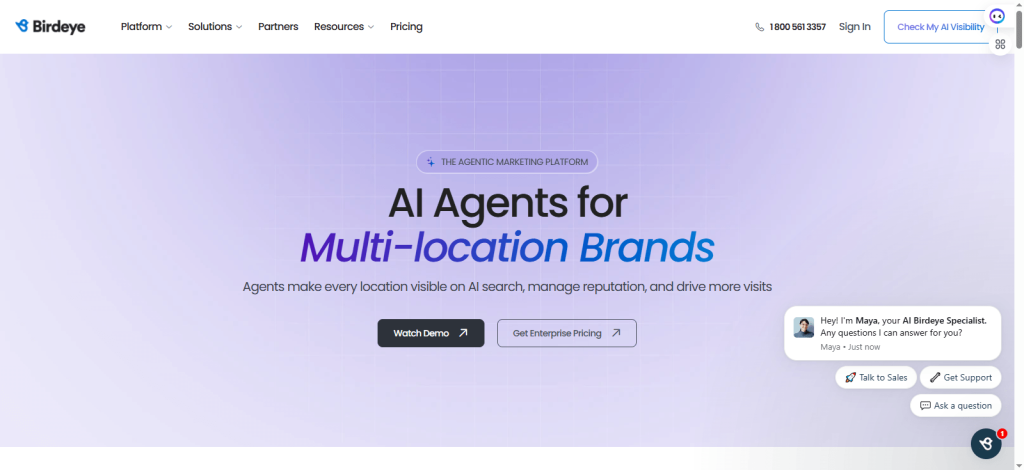
Birdeye is built for businesses with multiple physical locations: franchise brands, multi-location retail, healthcare groups, and hospitality chains. It automates the collection of Google and Facebook reviews at scale, monitors mentions across review platforms, and surfaces actionable reputation data by location.
If you’re a single-location ecommerce brand, Birdeye is overkill. But if you manage 10 or more locations and need review automation plus centralized reputation monitoring, it solves problems that most tools on this list don’t attempt.
Key Features
- Automated review requests via SMS and email post-visit
- Google and Facebook review monitoring and response tools
- Multi-location reputation dashboard
- Social media management and messaging
- Customer surveys and NPS
Pricing: Custom, contact Birdeye for a quote.
Pros
- Strong for multi-location reputation management
- Automated review collection at scale with minimal per-location setup
- Strong Google Business Profile integration
Cons
- Expensive for smaller businesses
- More platform than most ecommerce brands need
- Less useful for UGC or social proof widget embedding
Best For: Multi-location businesses in retail, hospitality, healthcare, or franchise models that need centralized reputation monitoring and automated review collection across locations.
8. Podium — Best for Local Businesses Using SMS
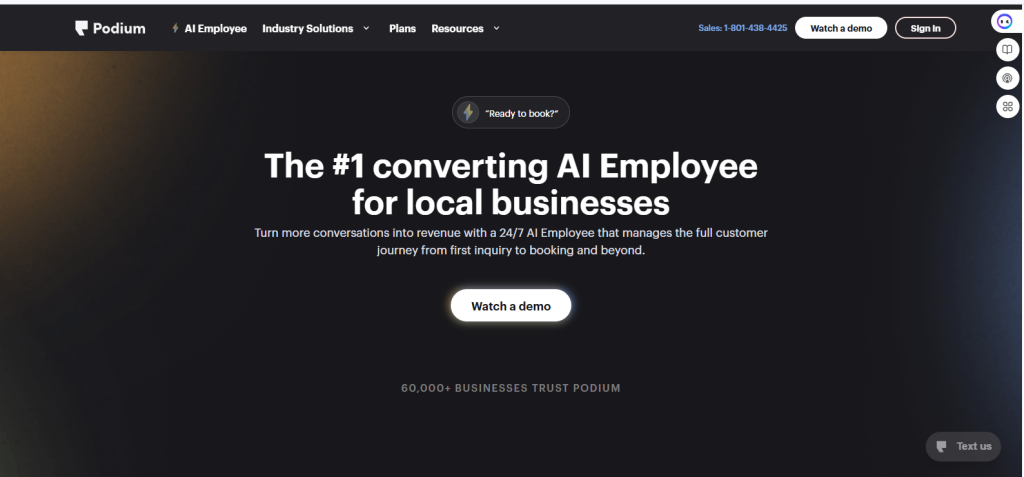
Podium centers its product around text messaging: review requests, customer conversations, and payment collection all happen via SMS. For local businesses where the customer relationship is personal and text-based communication feels natural, this approach works. Podium’s review automation specifically targets Google Reviews, which directly affects local search rankings.
Key Features
- SMS-based review request automation targeting Google Reviews
- Unified inbox for customer text messages
- Payment collection via text
- Local SEO tools tied to review volume
- Website chat widget
Pricing: Custom pricing based on business size and features.
Pros
- SMS review collection gets higher response rates than email for many local businesses
- Direct impact on Google Reviews volume, which affects local search rankings
- Combines review collection with broader customer communication
Cons
- Not built for ecommerce or widget-based social proof
- No UGC aggregation or review embedding capabilities
- Pricing can be prohibitive for small local businesses
Best For: Local service businesses — restaurants, clinics, salons, auto shops — that want more Google Reviews and a better customer communication workflow through SMS.
9. Bazaarvoice — Best for Enterprise Retail Syndication
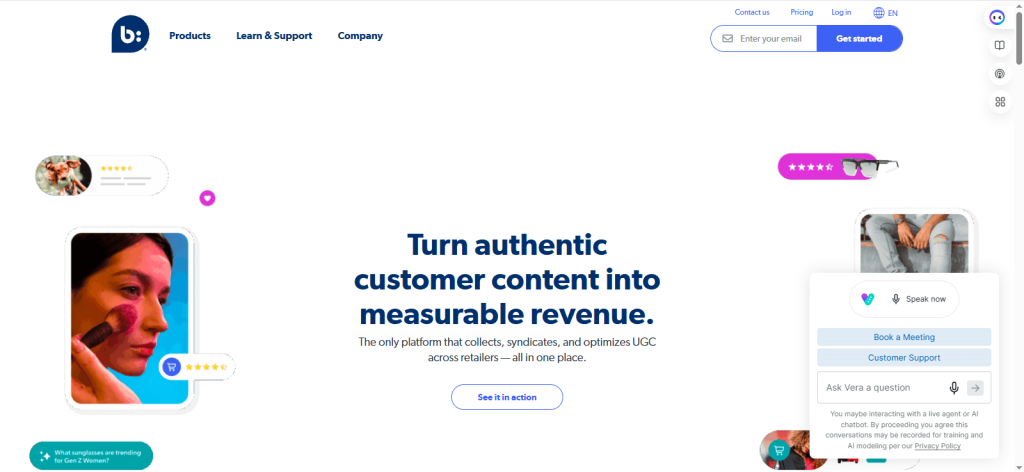
Bazaarvoice operates at a different scale than anything else on this list. Its core value is syndicating reviews across a massive retail network, so a review left on your brand’s website can appear on Target, Walmart, Best Buy, or Sephora product pages. For brands sold through major retail channels, this is a real competitive advantage.
The catch: Bazaarvoice is priced for enterprises. It’s not something smaller brands should be evaluating unless they’re actively selling through large retail partners.
Key Features
- Review syndication across 1,750+ retail partner sites
- Product sampling and review seeding programs
- Q&A and visual UGC management
- Retail analytics and competitive intelligence
- Enterprise compliance and moderation
Pricing: Custom enterprise pricing typically starts at several thousand dollars per month.
Pros
- Unmatched retail syndication network
- Strong for brands where review presence on retailer product pages drives sales
- Enterprise-grade compliance and data management
Cons
- Not accessible for SMBs on typical budgets
- Overkill for brands primarily selling DTC
- Long sales and onboarding cycles
Best For: Consumer goods brands selling through major retail chains that need product reviews syndicated to retailer product pages at scale.
10. Klaviyo — Best for Reviews Embedded in Email/SMS Marketing Flows

Klaviyo is primarily an ecommerce marketing automation platform, but it added native review collection features that make it worth including here. If you’re already using Klaviyo for email and SMS, having review requests built into your existing flows removes the need for an additional tool entirely.
The review functionality is more basic than dedicated review platforms, no advanced UGC display or widget customization, but the integration with purchase data and customer segments is genuinely powerful for brands that live inside Klaviyo’s ecosystem.
Key Features
- Post-purchase review request emails and SMS within existing Klaviyo flows
- Reviews tied to customer profiles and order data
- Basic review display widget for your website
- Integration with Shopify, WooCommerce, and BigCommerce
Pricing: Starts at $20/month for email (based on contact count). Reviews features included in paid plans.
Pros
- Removes a separate tool if you’re already on Klaviyo
- Reviews connected to customer segmentation data for smarter follow-up
- Solid for brands where email marketing is the primary customer touchpoint
Cons
- Review widget customization is minimal compared to dedicated platforms
- Not a standalone review solution if you’re not already using Klaviyo
- No social media UGC aggregation
Best For: Ecommerce brands already running Klaviyo for email and SMS who want to collect reviews without adding another platform.
11. LoyaltyLion – Best for Loyalty Programs Tied to Reviews
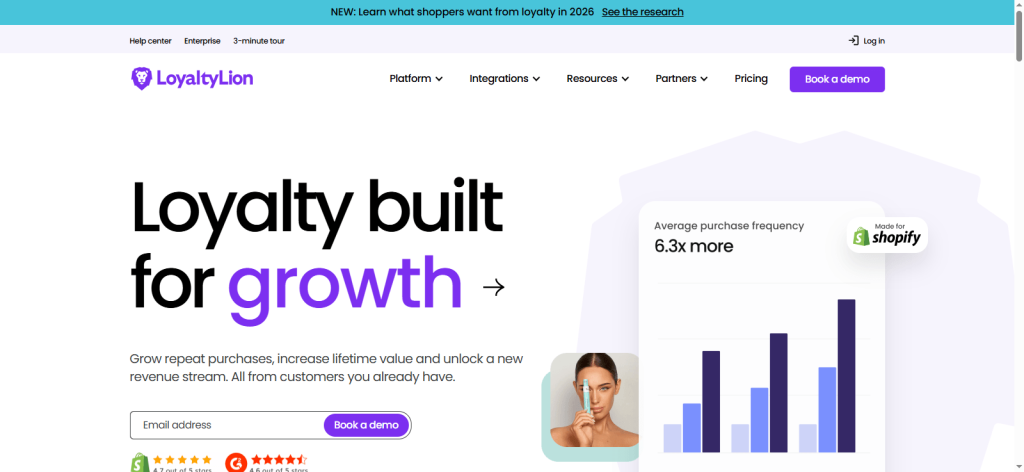
LoyaltyLion is a customer loyalty platform, not a review tool. But it earns a place here because it integrates review collection directly into loyalty reward flows. Brands can offer loyalty points in exchange for leaving a review, thereby making review collection part of a broader retention program.
If Yotpo’s loyalty module was your main reason for being on the platform, LoyaltyLion is the most direct replacement. It goes deeper on loyalty mechanics than Yotpo does while integrating cleanly with standalone review tools like Okendo or Stamped for the review side.
Key Features
- Loyalty program builder with points, tiers, and rewards
- Review incentive workflows that reward customers with points for leaving reviews
- Integration with Okendo, Stamped, and other review platforms
- Shopify, BigCommerce, and custom platform support
- Customer segmentation based on loyalty tier and engagement
Pricing: Starts at $199/month for the Small Business plan.
Pros
- Deep loyalty mechanics with genuine depth on tiers, rewards, and segments
- Review incentives built into loyalty flows improve review volume without cold outreach
- Strong ecosystem integrations with Shopify apps
Cons
- High starting price, not viable for brands below a certain revenue threshold
- Needs to be paired with a dedicated review platform for full review management
- More complex to set up than plug-and-play review tools
Best For: Established ecommerce brands where customer retention is a priority and review collection is part of a broader retention strategy.
How to Choose the Right Yotpo Alternative?
The best Yotpo alternative depends on the features your business actually needs.
For review widgets and social proof, Tagembed offers the most flexibility. It aggregates reviews from Google, Facebook, Amazon, Yelp, TripAdvisor, and other platforms while providing extensive customization options. It also supports social UGC displays and shoppable feeds for brands looking to go beyond reviews.
Shopify merchants focused on product reviews should consider Tagembed and Okendo. Their attribute-based reviews let customers rate factors such as fit, quality, and comfort, while photo and video reviews help shoppers make more confident purchase decisions.
Businesses that want reviews and loyalty on a single platform can benefit from Stamped.io. It balances both capabilities at an affordable price point, reducing the need for multiple tools.
For local businesses, Podium’s SMS-first review requests often generate higher response rates than traditional email campaigns, making it a strong choice for increasing Google Reviews.
Brands selling through major retail channels should look at Bazaarvoice. Its review syndication network helps distribute customer reviews across retailer product pages at scale.
Teams already using Klaviyo can simplify their stack by managing review collection within existing email and SMS workflows, provided advanced review display customization isn’t a priority.
Before making a decision, consider a few key questions:
- Do you need to collect reviews, display reviews, or both?
- Will user-generated content play a role in your marketing strategy?
- Are you committed to Shopify, or do you need a platform-agnostic solution?
- Is loyalty a core retention channel or simply an added feature?
- How does the platform price its service, by traffic, orders, views, or a flat monthly fee?
Answering these questions will quickly narrow the field and help you choose a platform that aligns with your goals, budget, and growth plans.
Final Verdict: The Best Yotpo Alternatives in 2026
There’s no universal replacement for Yotpo because businesses rely on it for different reasons. The right alternative depends on whether your priority is reviews, UGC, loyalty, local reputation management, or review syndication.
For most ecommerce brands, Tagembed offers the broadest value. It combines review aggregation from Google, Amazon, Facebook, Yelp, TripAdvisor, and other platforms with customizable widgets, social feeds, and shoppable UGC—without the enterprise-level cost.
Taggbox is better suited to brands running large-scale UGC campaigns, managing content rights, or displaying social content across events, digital signage, and in-store screens.
Shopify-focused businesses will find Okendo particularly strong for product reviews, thanks to its attribute-based feedback, visual reviews, and ecommerce-centric integrations.
Stamped.io remains a practical middle ground for brands that want both reviews and loyalty features without investing in separate platforms.
Trustpilot stands out when independent, third-party credibility matters more than on-site review presentation. LoyaltyLion, meanwhile, is built for brands focused on retention and repeat purchases through sophisticated loyalty programs.
For local and multi-location businesses, Birdeye and Podium excel at generating and managing Google Reviews, helping improve visibility in local search results.
Reviews.io is a solid option for brands seeking multi-channel review collection alongside Google Seller Ratings support. Businesses selling through major retail networks will benefit most from Bazaarvoice and its extensive review syndication capabilities.
Finally, Klaviyo makes sense for teams already operating within its ecosystem and looking to streamline review collection alongside email and SMS marketing.
The good news is that replacing Yotpo no longer means sacrificing functionality. Most businesses can now find a specialized platform that delivers stronger results, lower costs, and a better fit for their specific goals
Frequently Asked Questions
Tagembed has the strongest free plan on this list: 1 feed, access to review platforms including Google, Facebook, Yelp, and Amazon, and embeds on unlimited websites. It’s usable for small site testing before upgrading.
Tagembed is the only tool on this list that combines review aggregation from 8+ platforms with social media feeds from Instagram, TikTok, YouTube, and more, plus shoppable UGC. It’s the closest thing to a unified social proof and UGC platform at this price point.
Tagembed starts at $19/month, Taggbox at $19/month, and Stamped.io at $23/month, all significantly more affordable than Yotpo’s paid tiers. Tagembed also has a usable free plan.
Most dedicated review platforms, such as Okendo, Stamped, and Reviews.io, offer migration support or data import tools. Tagembed works differently; it aggregates reviews directly from the source platforms (Google, Facebook, etc.), so there’s no need to migrate reviews that already live on those platforms.
If review collection, post-purchase emails, SMS requests, and automated sequences are your priority, Reviews.io and Okendo have the strongest collection mechanics. Tagembed focuses on aggregating and displaying existing reviews across platforms rather than running collection campaigns natively.
Yes. Tagembed has a native WordPress plugin and works across WooCommerce, Shopify, Wix, Webflow, Squarespace, BigCommerce, and any platform that accepts HTML embed codes.
Embed social feed from Facebook, YouTube, Instagram, Twitter on your website, like a PRO
Invalid Email Address Multiple Themes