Quick Answer: Reels vs Shorts at a Glance
- Instagram Reels tends to reward engagement (likes, comments, shares, saves) and your existing follower relationships, with the Explore page as a major discovery surface.
- YouTube Shorts tends to reward watch time and completion, and is generally considered stronger at funneling viewers into your longer YouTube videos and into search.
- Both platforms offer strong reach for your overall short-form video marketing strategy.
| Factor | Instagram Reels | YouTube Shorts |
| Maximum length | Up to 3 minutes | Up to 3 minutes |
| Discovery | Reels feed, Explore, Feed | Shorts feed, Search, Home |
| Strongest advantage | Social discovery and engagement | Search and YouTube ecosystem |
| Funnel | Profile→Follow→ Product/Link | Short→Related content→Channel/Website |
The decision between using Instagram Reels and YouTube Shorts should be based on the requirements of your brand. Reels is well suited to trend-oriented content, fast engagement, and attracting profile visits, whereas Shorts enables searchable, long-term discovery via how-to content. Instead of picking just one platform, make your videos once, make minor adjustments to them, publish them on both platforms, and take advantage of the strengths that each one has.

Instagram
Reels

YouTube
Shorts
Understanding Instagram Reels vs YouTube Shorts
Before comparing performance, it helps to understand what each format is and how it fits into its platform. While Instagram Reels and YouTube Shorts are both short-form vertical videos, they serve slightly different purposes and audiences.
Instagram Reels
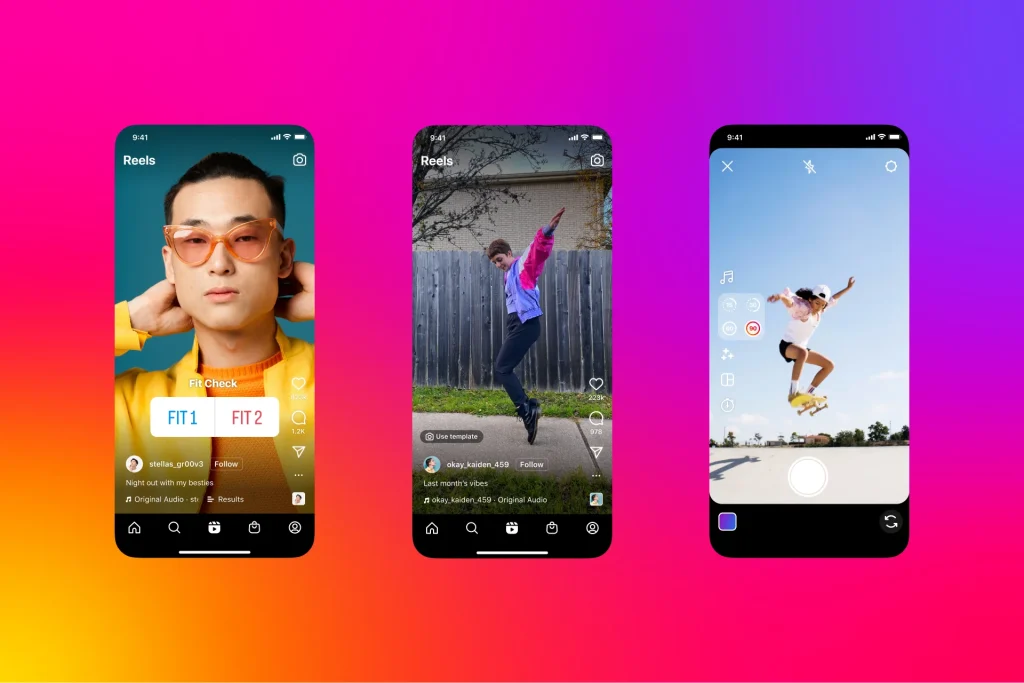
Reels are short, vertical videos that appear across Instagram, including the main feed, Stories, Reels tab, and Explore. Instagram increased the maximum Reel length from 90 seconds to 3 minutes in early 2025. Reels also benefit from Instagram’s visual culture, shopping features, and recommendation system. This makes them useful for brands that want to build awareness, encourage engagement, and guide viewers toward profiles, products, or other Instagram content.
YouTube Shorts
Shorts are YouTube’s vertical, mobile-first video format. YouTube raised the maximum length from 60 seconds to 3 minutes in October 2024. Shorts appear in a dedicated shelf, in search results, and on the home feed. One structural advantage Shorts tends to have is its connection to the rest of YouTube. A Short can act as a doorway into your full-length videos, your channel, and a website link in the description, something Reels doesn’t replicate in quite the same way.

Instagram Reels vs YouTube Shorts: 10 Key Differences
Reels and Shorts are based on the same idea for short-form video but offer different content experiences. Read about the differences between Reels and Shorts in the following points:
1. Video Length and Format in Reels vs Shorts
Both platforms offer vertical short-form videos, usually in a 9:16 aspect ratio. Instagram Reels and YouTube Shorts currently allow videos of up to 3 minutes in length. Yet longer videos do not necessarily perform better. What matters more than using the maximum allowed length is viewer retention and viewer response.
2. Reels vs Shorts Audience Demographics
Among younger adults, Instagram has a significant presence, as 31% of U.S. adults between the ages of 18 and 29 use the service, according to Pew Research. YouTube reaches 95% of U.S. adults in the 18 to 29 age group and is still widely used among older age groups. As a result, YouTube Shorts has a wider age reach. An examination of the Reels vs Shorts audience reveals clear demographic differences. It is for this reason that an analysis of YouTube Shorts vs Instagram Reels demographics shows why audience fit matters.
3. Content Style
Reels is well-suited to content that is trend-oriented, visual, related to lifestyle, entertainment, and focused on building a community, while Shorts is especially effective for educational, how-to, curiosity-based, and entertainment content. The style of content you currently have should help determine which platform you choose. YouTube and Instagram marketing tips are a great way to make a better decision. Moreover, repurposing is most effective when you adjust the video to match each platform’s audience behavior.
4. Reels vs Shorts Reach & Discovery
Reels relies heavily on recommendations across Instagram surfaces such as Explore and the Reels feed. Shorts combines recommendations with YouTube search and channel discovery. This gives Shorts an advantage for content that answers specific questions or targets searchable topics with ongoing viewer demand. When looking at YouTube Shorts vs Instagram Reels searchability, Shorts has a stronger connection to long-tail discovery. The difference also affects Reels vs Shorts reach, since Instagram can drive strong bursts through recommendations.
5. Reels vs Shorts Engagement Rates
Reels supports likes, comments, shares, saves, Stories, and profile interactions within Instagram’s social ecosystem. Shorts encourages viewers to watch, engage, subscribe, and continue exploring YouTube content. Analyzing Reels vs Shorts engagement shows Instagram favors immediate interactions within its social ecosystem. Your engagement strategy should match the action you want viewers to take after watching.
6. Reels vs Shorts Algorithm Signals
Neither platform provides the full details of its recommendation formula. If creators understand how the Reels and Shorts algorithms are set up, then they can adapt their hooks, content creation, and CTA. Instagram takes into account factors such as interactions, information about the content, and the relationships between viewers and the content. YouTube, on the other hand, uses signals relating to viewer satisfaction and watching behavior. Treat these as general discovery factors rather than as fixed algorithm rules.
7. Searchability
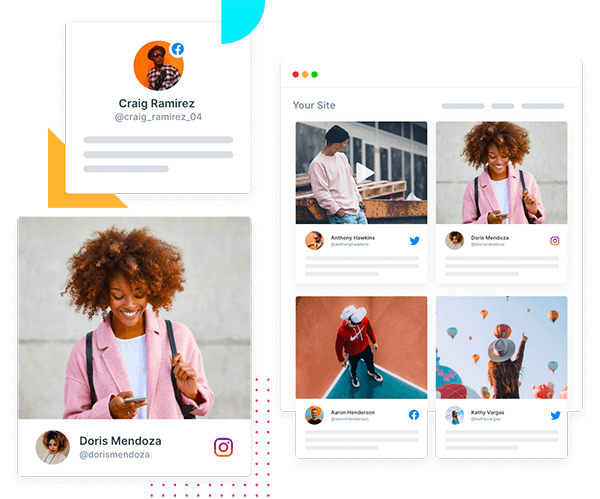
YouTube Shorts has a stronger connection to traditional search because Shorts can appear in YouTube Search alongside other video formats. Reels also supports search and keyword discovery, but Instagram remains more recommendation and social interaction driven. Search-focused topics can therefore benefit from Shorts. Another way you can explore to improve the visibility is social media widgets that have proven benefits in the conversions.
8. Content Funnel
Reels can move viewers from a video to your Instagram profile, follow action, product tag, or bio link. Shorts can move viewers toward related videos, channel subscriptions, playlists, and longer-form content. When evaluating the Instagram Reels vs YouTube Shorts content funnel, choose the platform that best matches the next action you want viewers to take.
9. Reels vs Shorts Monetization Models
YouTube has a clear structure for enabling creators to earn money via the YouTube Partner Program, with revenue sharing from views of eligible Shorts being included. On Instagram, Reels vs Shorts monetization options can involve Gifts, Subscriptions, Shopping, affiliate activity, and brand partnerships. The comparison involves how creators earn money and the different methods of earning are seen. Since availability and eligibility differ, companies should verify the current platform requirements before planning their monetization strategy.
10. Reels vs Shorts Analytics & Performance Metrics
Instagram Insights is the analytics board for the gram. It helps brands track reach, interactions, shares, saves, profile activity, and audience insights which helps understand the pattern of Reels performance within Instagram. YouTube Analytics provides deeper viewing data, including watch time, average view duration, audience retention, traffic sources, subscribers gained, “Shown in feed,” and “How many chose to view.” When comparing Reels vs Shorts analytics, you must compare retention, engagement, audience growth, website traffic, and actions after viewing to know which platform aligns better with your marketing goal.
Searchability and SEO: The Difference That Compounds Over Time
| SEO Factor | Instagram Reels | YouTube Shorts |
| Search discovery | Supports keyword-based search and recommendations | Strong visibility through YouTube Search and recommendations |
| Content lifespan | Often depends more on ongoing recommendations and engagement | Can continue attracting views through search and recommendations |
| Keywords | Use relevant keywords naturally in captions and on-screen text | Use clear keywords in titles, descriptions, and spoken content |
| Hashtags | Use specific, relevant hashtags | Use relevant hashtags without overloading the description |
| Content context | Captions, text, and visuals help Instagram understand the topic | Titles, descriptions, captions, and video context help YouTube understand the topic |
| Best SEO advantage | Strong social discovery and recommendation reach | Stronger long-term search and content discovery |
Best Practices for Both
- Use clear keywords that describe the video’s actual topic.
- Add on-screen text and captions to give viewers and platforms more context.
- Keep hashtags relevant instead of relying on broad or unrelated tags.
- Stay consistent within a topic so platforms can better understand your content focus.
- Optimize for the viewer first because retention and engagement still influence discovery. Embedding Instagram Reels or YouTube Shorts on your website is another way to convert the visitors.
Bottom line: It is best to select Shorts if long-term search discovery is most important, while Reels should be used when social engagement and recommendation-driven reach are more important. Brands have the option of using both platforms with a social media aggregator like Tagembed that helps embed the feed relevant to the content.
Integrate Instagram Reels on Your Website
Keep your website fresh with your latest Instagram Reels.
Try It FreeThe Content Funnel: How Reels and Shorts Move Viewers Further
Reach and engagement only matter if they lead somewhere. Neither funnel is better in the abstract. Reels tends to funnel toward your Instagram presence and shopping features, while Shorts tends to funnel toward more content and, eventually, your website.
Reels funnel: Reel → Profile → Follow → Product Tag or Bio Link. Instagram naturally moves viewers toward your profile and shopping features.
Shorts funnel: Short → Related Video or Channel → Website. YouTube works well for brands that already create longer videos.
Repurposing Workflow: Turning One Video Into Both
Building an efficient workflow for Reels vs Shorts for marketing allows teams to reuse content without treating both platforms identically. This approach also supports short-form video marketing by giving each platform a clear role, which completely avoids the false dilemma.
- Shooting a clean vertical video works across both platforms with only minor edits.
- Adjust the hook and caption per platform, as Instagram audiences tend to respond to trend-aware, visually led hooks. YouTube audiences tend to respond to curiosity-driven hooks that also support search.
- Customize CTA according to each funnel by understanding . Reels might mean directing people to your bio link or a product tag. On Shorts, that might mean pointing to a related long-form video or your channel. The most important benefit of embedding a YouTube Feed on Website is to keep visitors engaged on-site.
- Post on both, but review performance separately. Reels and Shorts use different analytics, and combining the numbers can hide which platform is actually driving results for your specific goal.
- Track the transitions and not just the clicks. A video can perform well on-platform and still fail to bring anyone to your site or move them toward a purchase, which is why the next section matters just as much as the post itself.
Measure Reels vs Shorts Performance Beyond Views
Tracking performance metrics across Reels vs Shorts requires consistent measurement across comparable timeframes.
| Key Metrics | What It Tells You |
| Watch Time and Retention | Shows whether viewers stay and watch your video. High retention usually indicates stronger content interest. |
| Shares and Saves | Shows whether viewers found your content useful enough to share or revisit. |
| Followers and Subscribers | Shows whether specific videos help grow your audience. |
| Website Clicks | Shows whether your videos drive viewers toward your website or landing pages. |
| Performance Over Time | Compare videos over the same timeframe instead of comparing lifetime views. Shorts can continue gaining views after publishing. |
Key metrics for measuring Reels vs Shorts engagement should focus on patterns across multiple videos instead of judging one viral post.
Want To Turn Short-Form Video Into Business Growth?
The number of views and likes indicates attention, but small businesses need to link that attention to actual results. Turning attention into measurable business value is the core goal of short-form video marketing. Therefore, you should focus on the pointers below to achieve the desired results.
- Track Website Traffic: Use your website analytics to see how much traffic comes from Instagram and YouTube. This helps you identify which platform brings more valuable visitors.
- Track Conversions: Use UTM links, dedicated landing pages, or unique offers to connect videos with sign-ups, inquiries, and purchases.
- Use Videos As Social Proof: Adding a YouTube feed or embedding Instagram feed on website gives visitors real examples of your products, services, or customer experiences. This also adds social proof to the website and builds trust.
- Embed Your Content: Social media aggregators like Tagembed let you collect and display social content on your website without coding. You can use an Instagram Widget for Reels or display your vertical videos using a YouTube Widget on high-intent landing pages.
- Combine Multiple Platforms: If your business publishes content across different networks, a social media aggregator can collect feeds into a single embed. You can then display them through a site-wide social media widget to boost conversions.
- Match Content With Pages: Place product videos on product pages and educational videos on related service pages. Review these social media widget examples for inspiration. This keeps the content useful instead of treating every page as a social feed.
- Measure Business Results: Keep tabs on website visits, inquiries, leads, sign-ups, and purchases together with the number of views and engagements. These figures will indicate whether or not your video strategy is contributing to real business growth.
Add YouTube Shorts to your website without coding.
Get StartedCommon Mistakes in the Instagram Reels vs YouTube Shorts Debate
A few patterns show up fairly often when brands get this comparison wrong:
- Treating Platforms Identically: Using the same caption, hashtags, and hook without adjusting for how each algorithm and funnel actually works.
- Ignoring Retention And Completion: It appears to matter on both platforms but especially on Shorts, where it’s frequently cited as one of the stronger recommendation signals. Ignoring how each Reels vs Shorts algorithm processes completion rate can also distort performance analysis.
- Not Repurposing: Months of content sits unused instead of reinforcing a website or email campaign. You can utilize the content with the help of social media aggregator tools to automate site display.
- Judging A “Winner” Too Early: Based on one or two standout posts rather than tracking performance across both platforms over several weeks.
- Comparing Raw Totals: This can make one platform look artificially stronger simply because of when the numbers were pulled.
- Stopping At View Count: If you stop at view count without connecting video performance back to website traffic, leads, or revenue, you may end up with incomplete data.
Final Thoughts
When it comes to Instagram Reels and YouTube Shorts, the question is what your content and audience require. Reels are good at generating social engagement and attracting profile visits, whereas Shorts can help with longer-term discovery. To decide between Instagram Reels and YouTube Shorts for brands, the strategy can be more effective if both platforms are used, real business results are tracked, and the audience is brought back to your website.
Frequently Asked Questions
It all depends on the audience and the type of content. Reels is better for visually oriented content that follows current trends, while Shorts suits businesses already producing educational or how-to content on YouTube. It is more reliable to test both options and look at your own data rather than to assume that one of them is generally better.
No, since neither platform releases exact figures. From each platform’s own creator guidelines and the widely reported trends, it can be seen that Instagram seems to place more emphasis on engagement and on relationships with its existing followers, whereas YouTube seems to place more emphasis on watch time and search behavior. This is one of the reasons why the same video can perform differently on each platform.
Yes, when you adjust the caption, the hook, and the call-to-action to match the way the audiences on each platform come across and act upon content, this approach works better than posting the identical set of materials on all platforms.
It’s easier to succeed with Instagram Reels if you already have some followers, whereas YouTube Shorts can assist new accounts in gaining visibility. For beginners, the best way to get a clear idea is to post on both platforms and then compare the results rather than depending on general opinions.
With the help of website widgets, you can easily embed your videos directly onto a page. There are a variety of website widget examples among which you can choose and find the right layout for your site. Along with this, the widgets also keep on updating automatically which helps the feed to be updated.
Embed social feed from Facebook, YouTube, Instagram, Twitter on your website, like a PRO
Invalid Email Address Multiple Themes